

Quick Summary: Fixing just the glass or seals is cheaper and faster if the frame is solid and square-like replacing a cracked pane or a failed insulated glass unit. But if the frame is rotted, warped, or leaking, a full window replacement is the only long-term fix, as the Department of Energy advises. Cox Glass helps homeowners in Oroville inspect the damage first to avoid overspending on unnecessary replacements. Always check for hidden issues like water damage or drafts before deciding.
A cracked pane or fogged window does not always call for a new window. Residential glass repair often works when the frame is solid. Full replacement fits failed frames, leaks, or poor operation. Cox Glass helps Oroville owners assess residential glass damage, sash issues, and frame condition before they pay for more than needed.
Residential Glass Repair vs Replacement: At a Glance
| Residential Glass Repair or Glass-Only Replacement | Full Window Replacement | |
|---|---|---|
| Best for | Cracked or foggy glass, failed IGU, minor hardware or seal issues | Rot, warping, persistent leaks, major air loss, repeated failures |
| What gets changed | Glass, IGU, hardware, weatherstripping, or localized components | Window unit, frame or sash, glass, seals, and hardware as specified |
| Cost logic | Usually lower because the existing frame remains | Higher because materials, labor, removal, and installation expand |
| Project disruption | Typically less removal, work, and finish repair | More removal, installation, trim, sealing, and cleanup |
| Long-term result | Strong when the frame, sash, and opening are sound | Best when the existing assembly is near end of life |
How Residential Glass Repair or Glass-Only Replacement and Full Window Replacement Compare
Residential Glass Repair or Glass-Only Replacement
This targeted work keeps a sound frame and sash in place. It suits cracked or foggy glass, failed IGUs, and minor seal or hardware issues.

Full Window Replacement
This replaces the full assembly when rot, warping, leaks, or poor operation reach beyond the glass. Federal guidance notes damaged frames may require a complete unit replacement.
When Residential Glass Repair Is the Better Choice
Signs the Damage Is Limited to the Glass or a Component
Choose repair when the frame is solid, square, and dry. A cracked pane, failed insulated glass unit, worn weatherstripping, or broken hardware may not require a new window. The Department of Energy notes that sound frames can support glass or sash replacement.
Warning: Fog between panes usually means the seal failed. It will not clear on its own.
Why Glass-Only Service Can Be the More Practical Fix
Glass-only work preserves trim and avoids disturbing the wall. It also solves a safety issue fast. Ask Cox Glass, LLC to inspect the frame, sash, and opening first.
| Condition | Practical fix |
|---|---|
| Broken pane, sound frame | Replace the glass |
| Failed seal, sound sash | Replace the insulated glass unit |
Also Read: Window Replacement vs Repair: Which Saves More Money?
When Full Window Replacement Makes More Sense
Frame, Sash, and Opening Problems
Choose full replacement when the frame is soft, warped, rotted, or leaking into the wall. A new pane will not fix a failed sill, damaged sash, or an opening that no longer holds the window square. The Department of Energy notes that water damage in frames or casings can signal replacement needs.
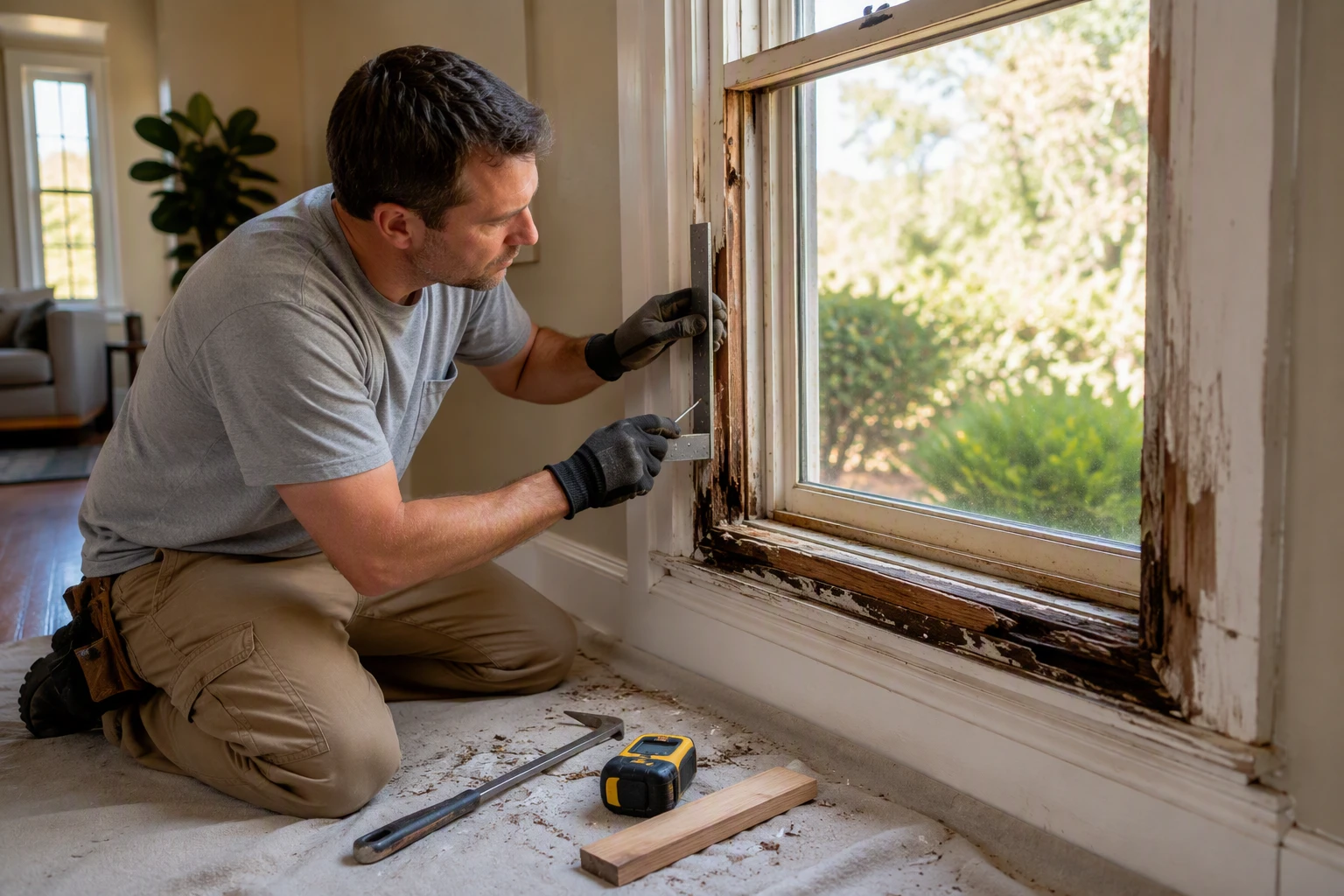
Warning: Fix water entry before installing the new unit.
Age, Efficiency, and Repeated Repairs
Replacement can make sense after repeat seal failures, sticking sashes, and drafts across several old windows. Modern units improve the whole window, not only the glass. Compare whole-unit ratings, since frames affect performance too, as the Department of Energy explains.
How to Compare Nearby Residential Glass Companies
What to Include in Your Estimate Request
Ask each company to inspect the same window and price the exact scope. Include photos, size, frame condition, fogging, cracks, and whether you want glass-only, IGU, or full-window replacement.
| Quote item | Why it matters |
|---|---|
| Glass and labor | Lets you compare like for like |
| Frame or sash work | Reveals hidden repair needs |
| Warranty and cleanup | Defines what happens after install |

Request whole-unit U-factor and SHGC for replacement windows. DOE guidance says both affect comfort and energy use.
Questions That Reveal the Real Scope
- Is this a pane, insulated glass unit, sash, or full-window quote?
- Will you check for leaks, rot, and failed seals?
- Does the price include flashing, sealing, haul-away, and warranty?
A low bid that skips frame repairs can cost more later.
Also Read: Window Replacement Trends: Energy Savings in 2026
Which Option Should You Choose for Your Home?
Choose glass or IGU replacement if the frame is solid, square, and free of rot. It solves broken glass or failed seals with less disruption.
Choose full window replacement if the frame leaks, binds, rots, or has water damage. The Department of Energy advises full replacement when frame parts are damaged.
Get a diagnosis first. Cox Glass, LLC can assess the glass, sash, frame, and seal before you commit.

Get a clear repair-versus-replacement diagnosis from Cox Glass, LLC before you spend.
Frequently Asked Questions
Q1: Compare residential glass companies nearby?
Compare licenses, insurance, written scope, glass type, warranty, and lead time. Ask whether the quote covers pane repair, insulated glass unit replacement, or a full window.
Q2: Can a broken double-pane window be repaired?
Usually, replace the sealed glass unit. A fogged or cracked IGU cannot regain its seal through a simple surface repair.
Q3: Is window replacement needed after one broken pane?
Not always. If the frame works well and matches current code needs, replacing only the glass may be the better value.
Conclusion
Repair sound frames and failed panes. Replace the full window for rot, leaks, or frame damage. DOE guidance supports this diagnosis-first approach.



Recent Comments