
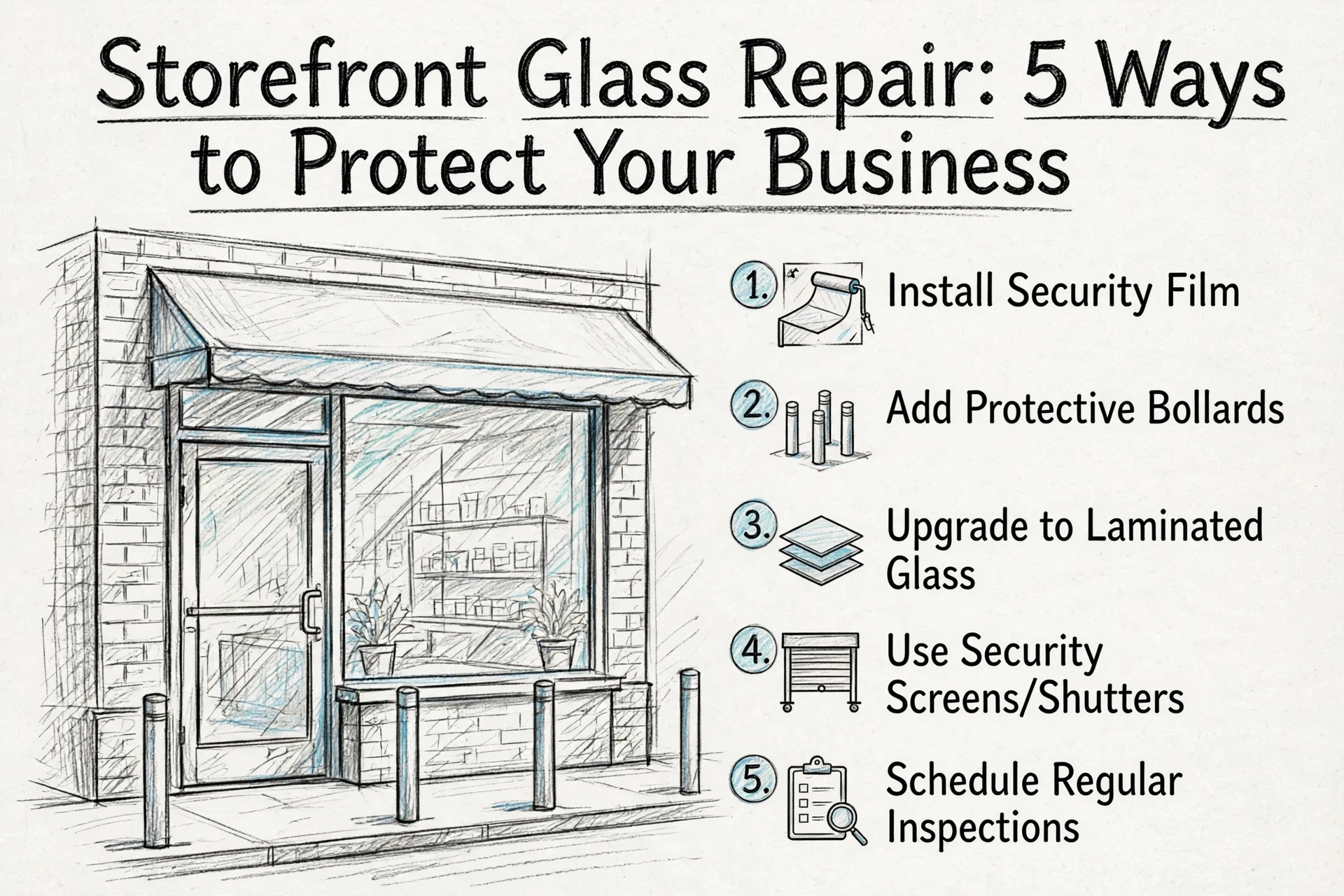
Quick Summary: Protecting a storefront starts with code-compliant safety glazing, followed by an emergency board-up plan, forced-entry upgrades, and twice-yearly inspections that catch worn seals, corroded frames, and damaged hardware. Keep a licensed, insured local glass company on call to shorten closures and document damage for insurers and landlords. Cox Glass, LLC is presented as a commercial glazing option for Oroville and Chico with over 60 years of local experience.
One cracked pane over your checkout counter can close the store for a day. A shattered door panel can do it in minutes. Storefront glass is the most exposed surface you own, and it carries safety, insurance, and lease duties that home glass never does. Most owners wait until damage happens, then pay more and stay closed longer. These five storefront repair steps, ranked by the risk each one removes, cover code-compliant glazing, fast response, forced-entry hardening, upkeep, and choosing a vetted local glass company.
Storefront Protection Strategies At a Glance
| Strategy | Best for | Risk it addresses | Typical effort level |
|---|---|---|---|
| Specify Code-Compliant Safety Glazing | Doorways, sidelites, and ground-level panels | Injury, code violation, insurance denial | One-time replacement, minimal ongoing work |
| Set Up an Emergency Board-Up and Rapid Response Plan | Retail, restaurant, and hours-open businesses | Lost sales, theft, further damage | One setup call, then a standing protocol |
| Harden the Opening Against Forced Entry | Late-hours retail and higher-incident districts | Break-ins, smash-and-grab losses | Planned retrofit at replacement time |
| Run a Preventive Maintenance and Inspection Schedule | Multi-location portfolios and aging storefronts | Sudden breakage, unplanned repair spend | Recurring, low-intensity visits |
What to Know About Storefront Glass Repair
Storefront glass repair covers fixing or replacing the glazing at a commercial entrance and display area. It follows different rules than home glass work, and the stakes are higher because customers walk through it every day.
Why does it matter right now? A single cracked pane touches safety codes, insurance terms, lease clauses, and security all at once. Small decisions can carry liability, closure, or lease consequences.
That context makes it easier to decide what to fix, what to upgrade, and who to call for storefront repair when a pane is already down.
1. Specify Code-Compliant Safety Glazing
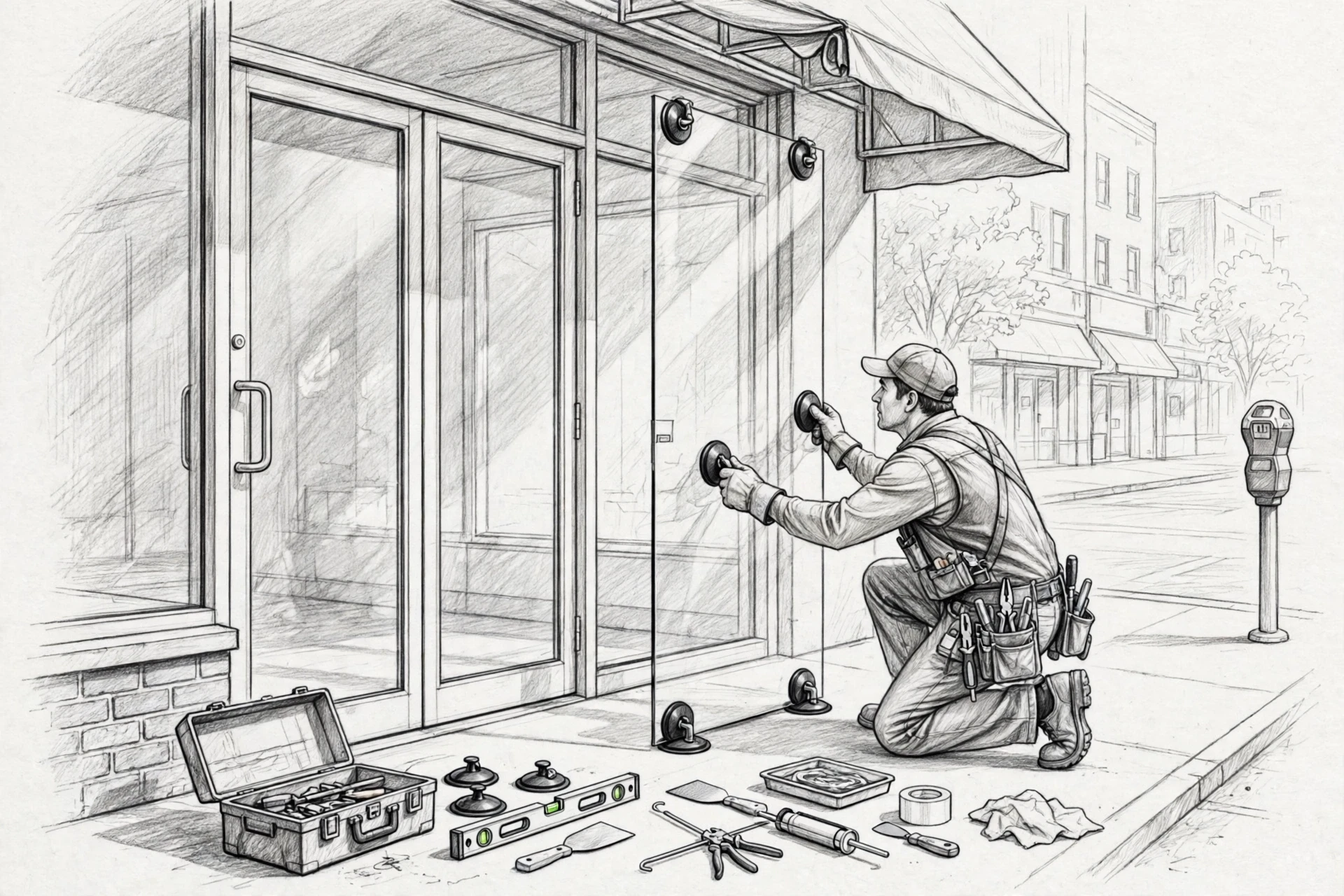
Tempered and laminated glass in doors, sidelites, and low panels removes the biggest liability a storefront carries. Doors, panels within roughly 18 inches of a door, and large floor-level pieces generally require safety glazing tested to ANSI Z97.1 or CPSC 16 CFR 1201, and tempered glass must meet the federal standard for architectural glazing. Tempered glass breaks into small, dull pieces, while laminated glass holds the opening together. A storefront repair that swaps annealed glass for safety glazing also simplifies insurance and inspection conversations, and commercial glazing teams like Cox Glass’s commercial glass repair crew handle these doorways and ground-level panels as a one-time job.
Highlights
- Covers doors, sidelites, and panels within about 18 inches of a door
- Tempered glass fragments into small pieces rather than shards
- Laminated glass holds the opening together after impact
- Strongly reduces the liability of a customer or passerby injury
Specs
- Best for: Doorways, sidelites, and ground-level panels
- Risk it addresses: Injury, code violation, insurance denial
- Typical effort level: One-time replacement, minimal ongoing work
Pros
- Meets safety code requirements for doors and adjacent panels
- Lowers the chance of a serious injury claim
- Simplifies insurance and inspection conversations
Cons
- Higher material cost than standard annealed glass
- Tempered panels cannot be resized or cut on site
It ranks first because an injury to a customer or employee is the most expensive outcome a storefront can produce, and code-compliant glazing is a requirement, not an upgrade.
Last updated: October 27, 2026
2. Set Up an Emergency Board-Up and Rapid Response Plan
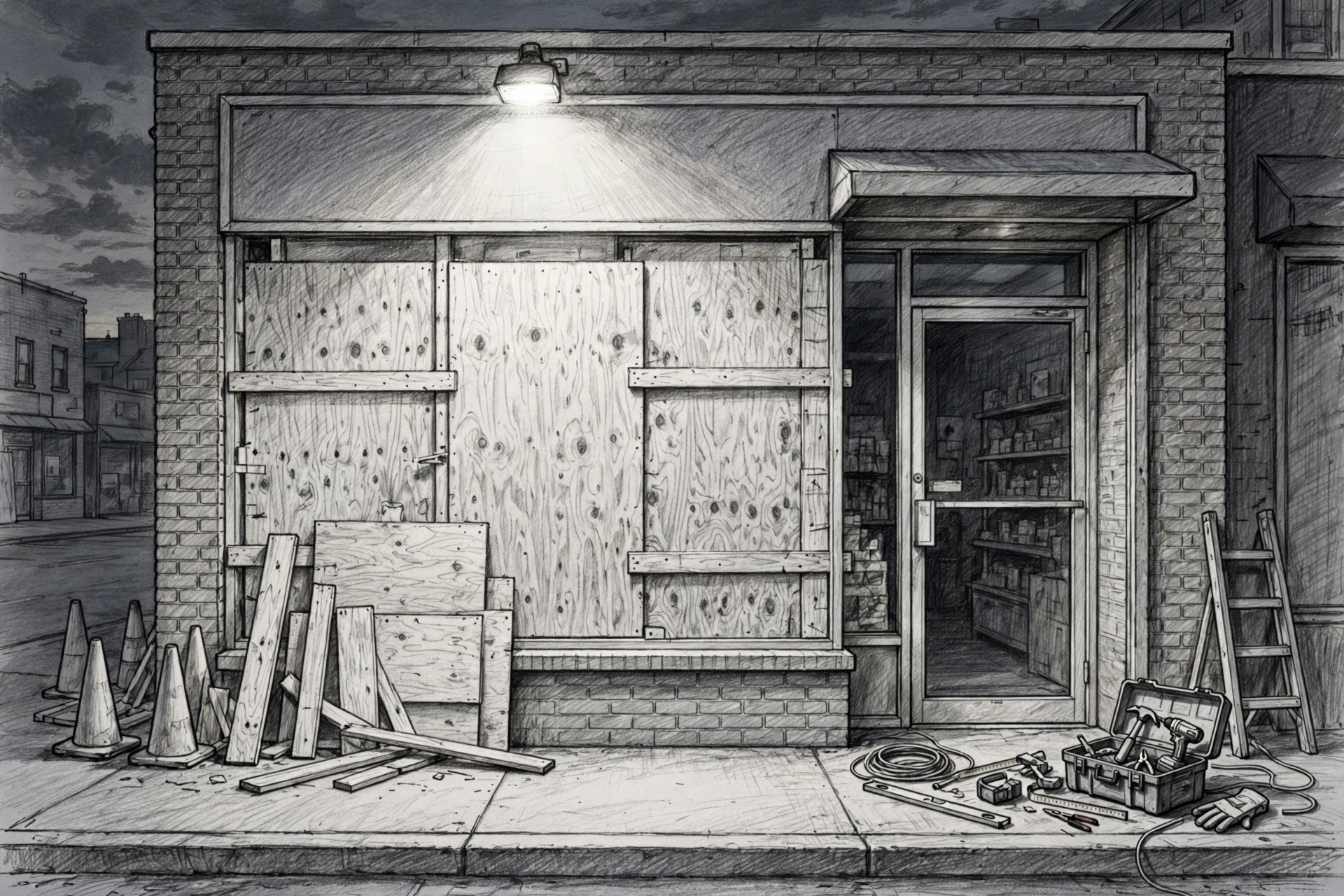
After a break-in, follow three steps: secure the opening with a board-up, document the damage for your insurer, then schedule the glass replacement. With a commercial glass partner on file, board-up comes first so the opening is never left open. Waiting until morning means a larger hole and a rushed, costlier repair.
Highlights
- Board-up first, replacement second, so the opening is never left open
- Cuts closure time and deters secondary theft and vandalism
- Documents damage properly for insurance
- Often cheaper than emergency work ordered without a plan
Specs
- Best for: Retail, restaurant, and hours-open businesses
- Risk it addresses: Lost sales, theft, further damage
- Typical effort level: One setup call, then a standing protocol
Cons
- Requires a vendor contact on standby
- Board-up is a temporary measure, not a repair
It ranks second because it protects revenue and property in the most time-critical scenario, though it depends on the vendor relationship covered later.
Last updated: October 27, 2026
3. Harden the Opening Against Forced Entry
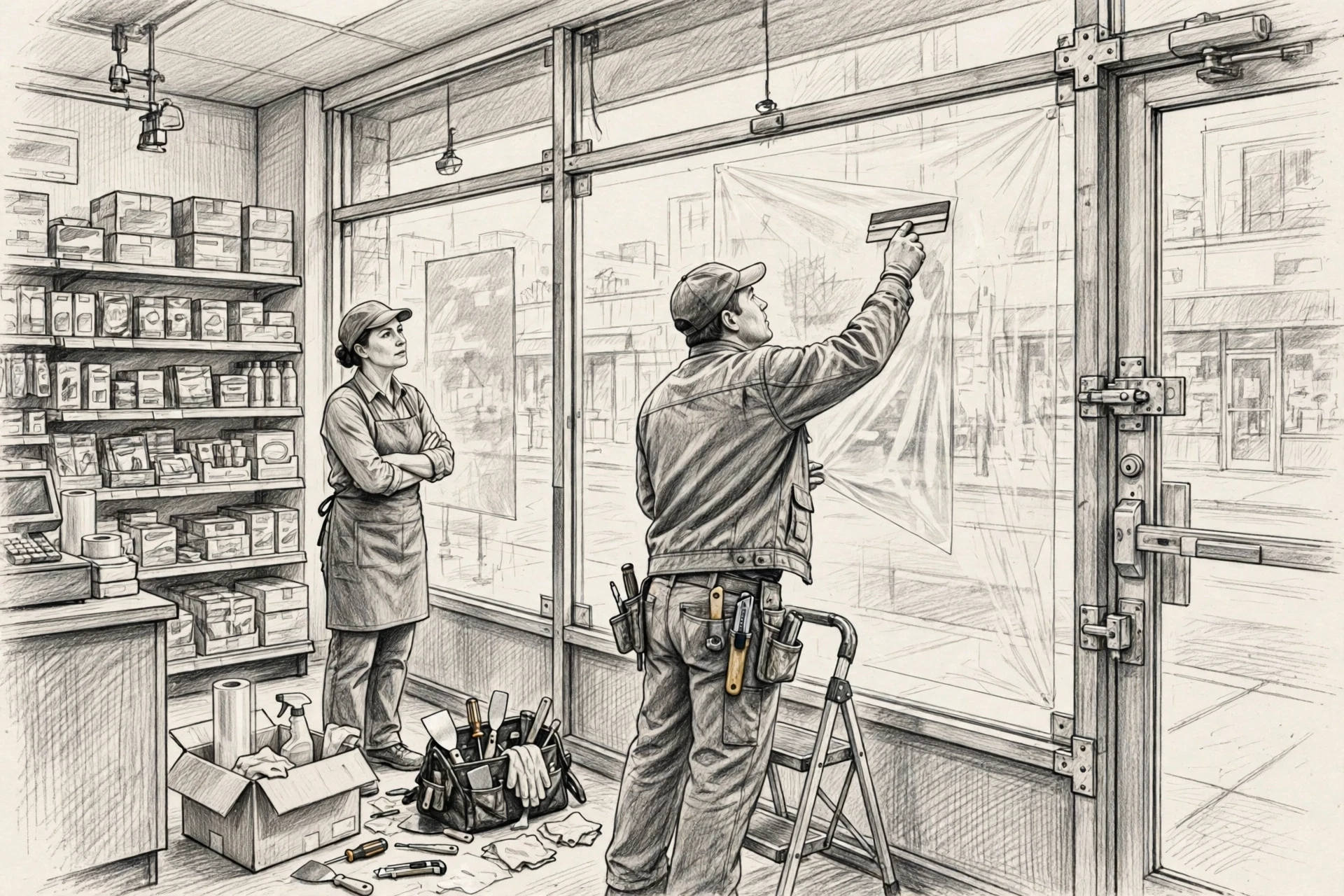
Tempered and laminated safety glazing limit injury, but they don’t stop a determined entry. Security film applied to the interior face typically adds 15-60 seconds of delay, and laminated security glazing resists repeated impact. Upgraded locks, reinforced frames, and door hardware close the gaps around the pane, such as security doors built for retail openings.
Specs
- Best for: Late-hours retail and higher-incident districts
- Risk it addresses: Break-ins, smash-and-grab losses
- Typical effort level: Planned retrofit at replacement time
Pros
- Deters entry rather than only limiting injury
- Lower recurring repair and boarding costs
- May support insurance terms
Cons
- Adds cost to every glazed opening
- Film must be specified at install, not retrofitted casually
It ranks third because it prevents the incident rather than responding to it, but upfront cost and a proper site assessment place it below the code and emergency measures.
Last updated: October 27, 2026
4. Run a Preventive Maintenance and Inspection Schedule
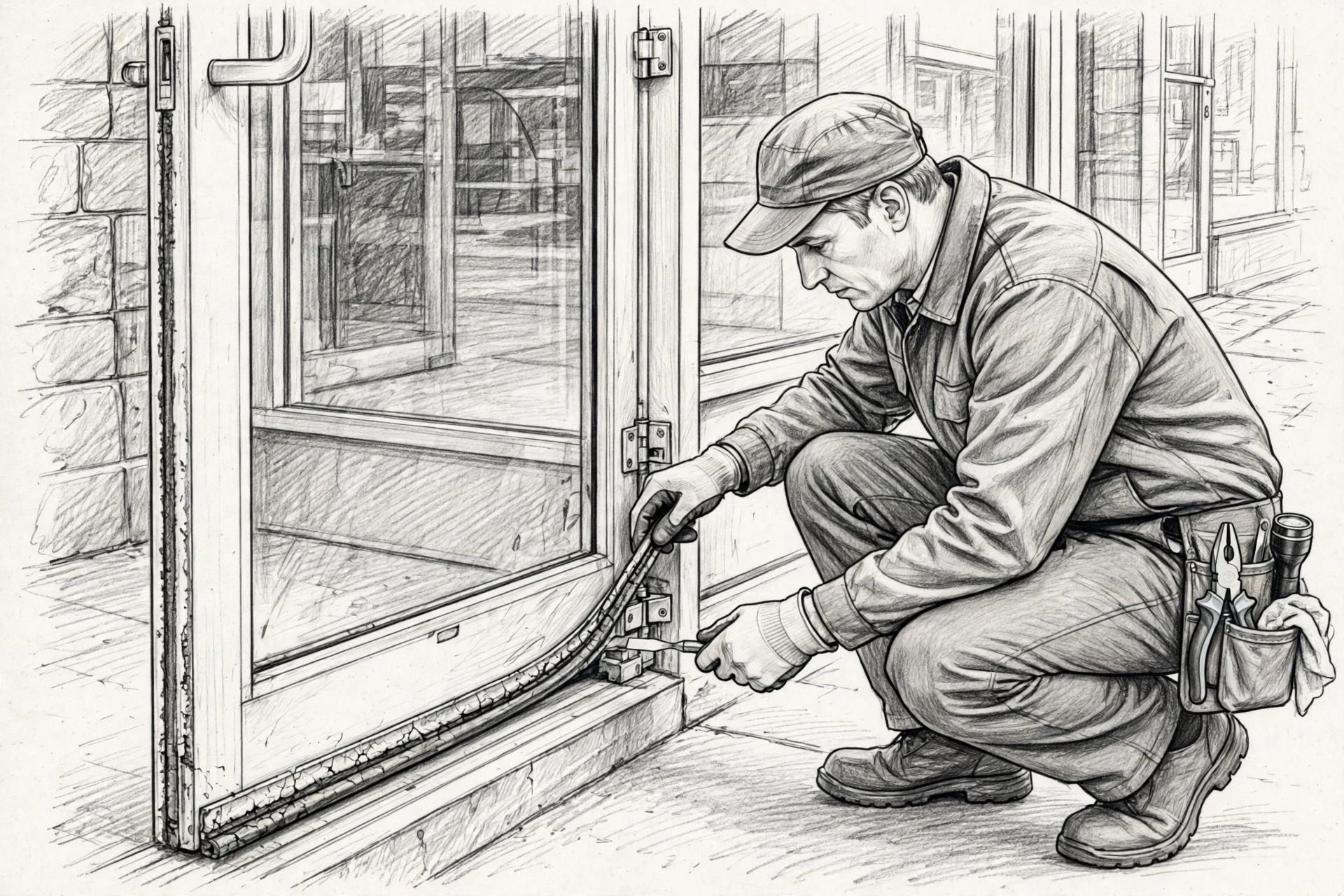
Scheduled inspections catch failed seals, loose gaskets, and worn hardware before they become broken glass. Most storefront failures start with components that were already failing, like perished glazing putty, hardened gaskets, corroded frames, and worn door hardware. A routine walk-through finds these while they are still a low-cost fix, since routine inspections help identify wear and damage before downtime hits.
Highlights
- Catches seal, gasket, and frame corrosion early
- Extends the service life of existing glazing
- Turns unpredictable repairs into planned line items
- Creates a record of condition for leases and insurers
Specs
- Best for: Multi-location portfolios and aging storefronts
- Risk it addresses: Sudden breakage, unplanned repair spend
- Typical effort level: Recurring, low-intensity visits
Pros
- Spreads repair cost over time
- Reduces emergency call frequency
- Documents condition for tenants and insurers
Cons
- Requires scheduling discipline
- Does not prevent impact or vandalism
Why it ranks here: It is the strongest long-term cost control, but savings build gradually rather than in one emergency decision.
Last updated: October 27, 2026
Honourable Mentions
The four steps above do the heavy lifting. One more habit ties them together: keeping a trusted glazier on call before you need one.
- Build a Standing Relationship With a Local Glass Company – A vetted local provider makes every other protection measure faster, cheaper, and properly documented.
How to Compare Local Storefront Glass Repair Companies
Pick a commercial glazing contractor with these five checks:
- Licensing and insurance. Confirm active licenses and general liability coverage. Ask for documents before scheduling work.
- Storefront experience. Ask about tempered and laminated glass, storefront doors, board-up, and code-compliant installation in your area.
- Response time. Compare after-hours availability. In retail, closure hours usually cost more than the repair.
- Pricing scope. Ask who handles permits and inspections, and whether the quote includes glass, labor, removal, disposal, gaskets, and putty.
- Warranty and terms. Request written warranty terms, plus photos and documentation you can hand to your insurer or landlord.
Cox Glass, LLC meets all five for Oroville and Chico businesses: over 60 years of local work, board-up service, and a full commercial crew. Also ask about a standing maintenance agreement. Few shops that specialize mainly in auto glass, like Safelite, cover commercial storefronts the same way.
A cracked pane is a liability, not a cosmetic issue. Cox Glass, LLC serves Oroville and Chico with 60 years of experience. Get your free storefront quote today.
Frequently Asked Questions
Q1: How do I compare local storefront glass repair companies?
Check licensing, insurance, storefront experience, after-hours response time, pricing scope, and written warranty terms. A commercial glazing contractor serving your area, like Cox Glass, LLC, should document every quote.
Q2: How fast can emergency storefront board-up happen?
With a vendor on file, usually within hours of your call, including nights and weekends. Confirm after-hours availability before you need it.
Q3: Does insurance cover storefront glass replacement cost?
Most commercial policies cover sudden damage, minus your deductible. Photograph damage and keep the invoice for documentation.
Q4: How often should storefront glass be inspected?
Twice yearly works for most storefronts. Check seals, gaskets, and door hardware each visit.

Recent Comments