
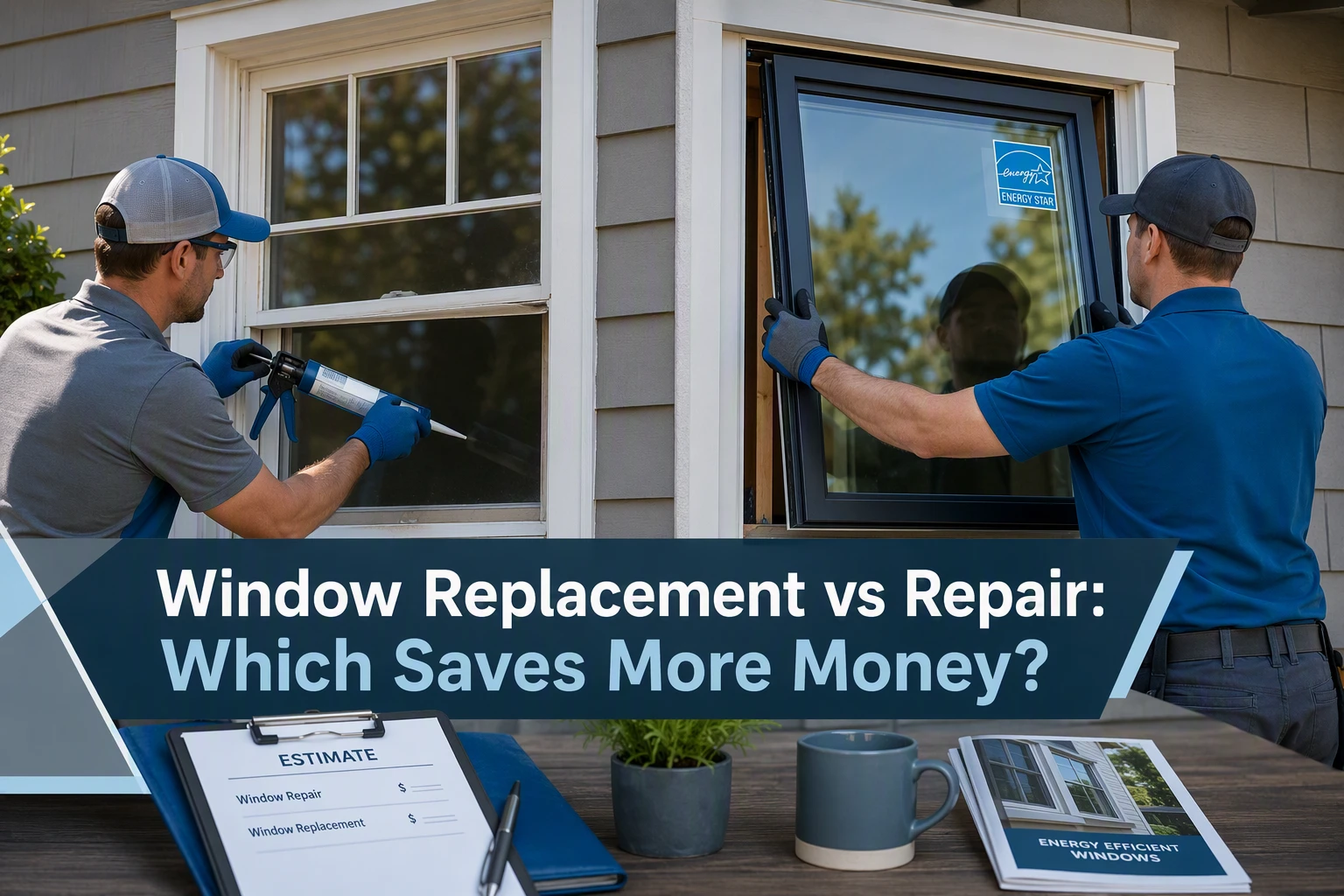
Quick Summary: Repairing windows is cheaper initially if the frame is in good shape and issues are minor. Replacing windows makes more sense when frames are rotted, leaks persist, or energy efficiency needs a boost. Over time, replacement often saves more money through better insulation and energy bills, especially for old or damaged units.
If the sash, glass, and frame are still sound, repair usually beats window replacement on cost. If the frame is rotted, warped, or leaking, window replacement often saves more over time. Owners need to know if a drafty or foggy unit needs a fix or full window replacement. This comparison uses real condition checks, cost logic, and performance basics to guide the call.
Window Replacement vs Repair: At a Glance
| Window repair | Window replacement | |
|---|---|---|
| Upfront cost | Lower; often the cheapest first fix | Higher; more labor and material intensive |
| Best for | Sound frames with isolated issues | Rotted, warped, fogged, or repeatedly failing windows |
| Typical lifespan impact | Extends usable life when failure is localized | Resets service life for the opening |
| Energy performance | Improves comfort modestly if air leaks are the issue | Usually much better with modern glass and seals |
| Project disruption | Low; usually faster and less invasive | Moderate to high; more site work and cleanup |
How Window repair and Window replacement Compare
Window repair
Window repair fixes one failed part, not the whole unit. It fits homeowners or managers with solid frames, small leaks, or cracked glass who want the lowest first-step cost. The Department of Energy says improving window performance can reduce heating and cooling loads, with savings varying by climate and product performance.
Window replacement
Window replacement swaps the full unit to address age, fogging, rot, warping, or repeat failure. It suits owners who need a fresh service life and stronger efficiency gains. ENERGY STAR notes certified replacements can cut household energy bills versus old single-pane windows.

Upfront Cost and Long-Term Payback
Cheap repair wins only when the window problem is small and isolated. If you keep paying for fogged glass, recurring leaks, sticking sashes, or rotted frames, the math flips fast.
- Repair is usually cheaper now for failed seals, hardware, caulking, or minor glass damage.
- Replacement often saves more later when the frame is failing, drafts keep coming back, or the unit is old and inefficient.
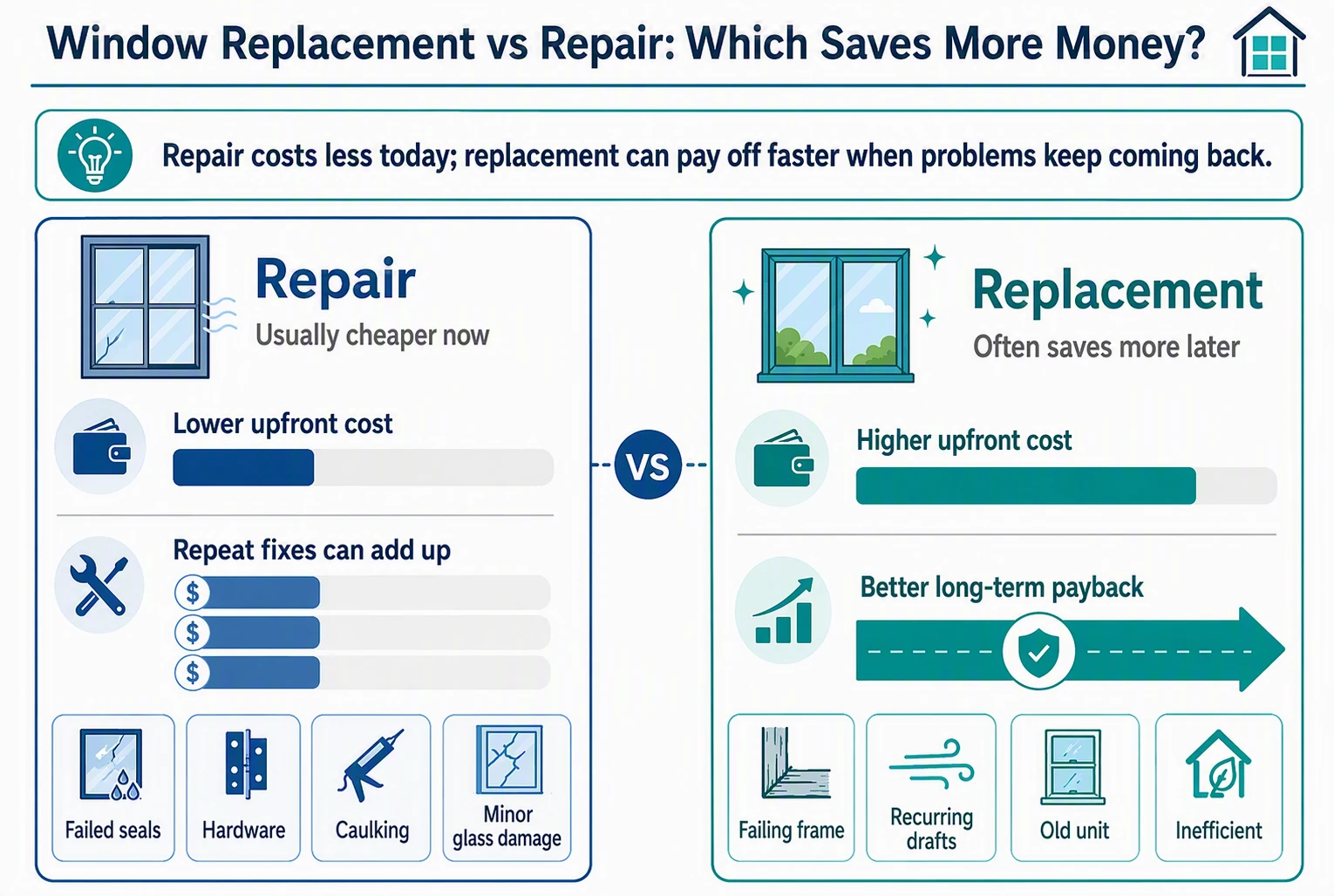
ENERGY STAR estimates that replacing poor-performing windows with ENERGY STAR certified models can reduce annual household energy costs by an average of up to 13% nationwide when replacing single-pane windows. Actual savings vary by climate, utility rates, window type, and home characteristics.
If the same window needs repair twice in a few years, ask for replacement pricing too.
Also Read: https://coxglassco-ca.com/blog
Condition Clues That Point to Repair or Replacement
Signs the frame is still worth saving
Repair usually wins if the frame is solid, square, and dry. The U.S. Department of Energy says windows in good condition can often be improved with caulk, weatherstripping, or storm panels instead of full replacement according to DOE. Look for:
- minor drafts
- loose hardware
- peeling paint
- small glass cracks
- light sash wear

If damage stays local and the window still opens well, repair is often the cheaper move.
Signs replacement is the safer investment
Replace when the problem affects structure, safety, or sealed glass performance. ENERGY STAR flags degraded sills and sashes, failed double-pane seals, and windows that will not open as strong replacement signs per ENERGY STAR. Watch for:
- soft or rotted frame sections
- fog between panes
- recurring leaks
- warped frames
- stuck or painted-shut operation
Also Read: https://coxglassco-ca.com/adas-calibration-oroville-static-vs-dynamic-guide
Energy Savings, Comfort, and Property Value
Repair helps when the problem is small: fresh weatherstripping, new caulk, or hardware fixes can cut drafts and improve comfort fast. That is often the cheapest short-term move.
Repair cannot match replacement if the window is single-pane, has failed seals, rotted frames, or major air leaks. In those cases, new ENERGY STAR certified windows can lower household energy bills by an average of up to 13% nationwide when replacing single-pane windows, according to ENERGY STAR. ENERGY STAR modeling estimates average annual savings of approximately $282 to $568 when replacing single-pane clear windows, depending on climate zone, while actual savings vary by home and utility rates.
Also Read: https://coxglassco-ca.com/add-value-to-your-house-by-adding-replacement-windows
Which Should You Choose for Your Home, Business, or Property?
Choose repair if the glass issue is small, the frame is solid, and the window still seals and works well. Choose replacement if you have drafts, failed seals, rot, water damage, or old single-pane units. The U.S. Department of Energy says improving windows can be the most cost-effective move when existing units are still in good shape, but replacement makes more sense for major efficiency or damage problems according to DOE. For many homes, replacing single-pane windows with ENERGY STAR certified windows can reduce household energy bills by an average of up to 13% nationwide, although savings vary by climate and existing window type.

Need a clear cost answer? Contact Cox Glass, LLC for honest repair-or-replace guidance and a local quote.
Frequently Asked Questions
Q1: Compare replacement windows for homes?
Compare price, frame material, glass type, energy ratings, warranty, and install quality. Vinyl often costs less upfront. Fiberglass and wood can last longer. Full replacement costs more than insert units but can fix rot, leaks, and poor fit.
Q2: When is window repair the cheaper choice?
Repair usually wins when the frame is solid and the issue is small, like broken glass, worn seals, stuck hardware, or minor leaks. If problems keep coming back, replacement often saves more over time.
Q3: How do I know if replacement will lower energy bills?
Look for drafts, fogged panes, soft frames, and rising heating or cooling costs. New windows can cut waste, but savings depend on your climate, window size, and install quality, not just the glass itself.
Conclusion
Repair saves more money when damage is small and the frame is sound. Replacement wins when problems repeat, energy loss is high, or structural failure starts, and For qualifying improvements placed in service through December 31, 2025, the federal Energy Efficient Home Improvement Credit may have improved the project economics. Verify current federal, state, and utility incentives before relying on any credit.



Recent Comments