
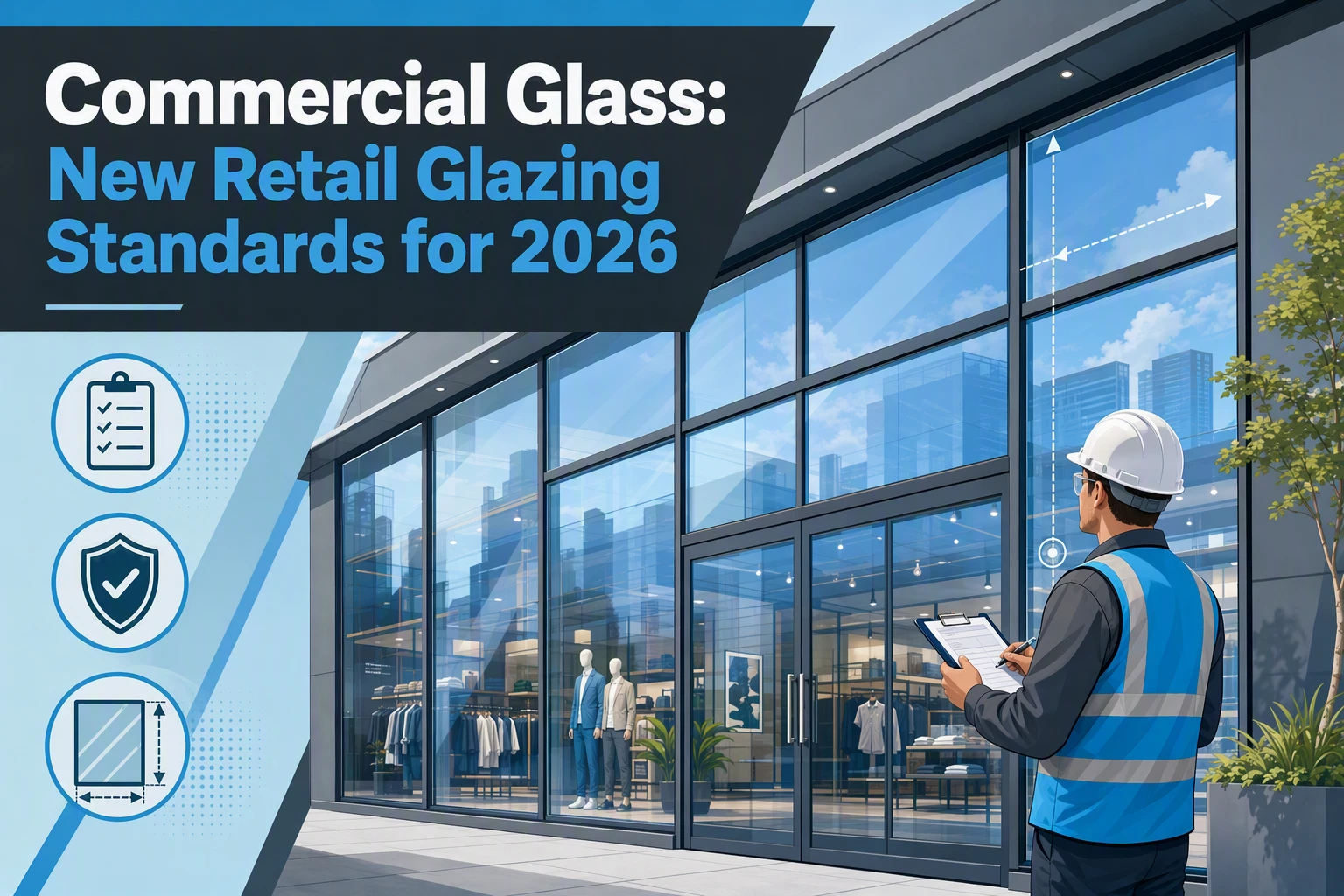
Quick Summary: ANSI Z97.1-2026 now requires vacuum insulating glass (VIG) to be tested as a full unit with a 100-pound shot bag, not individual panes, and mandates permanent, legible labels showing supplier details, impact class (A or B), and size rating. Retailers must verify these marks match project specs before installation, as federal rules still reference the older 2015 standard in some cases. Hazardous locations like doors and low-level panels need safety glazing, and suppliers must confirm the exact glass build was tested-not just assumed compliant. Always check local code adoption and keep test records on file.
ANSI Z97.1-2026 changes how the industry tests and marks safety glass in buildings. For retail glazing, it adds a path for vacuum insulating glass, clarifies impact tests, and reinforces permanent labels. Yet 16 CFR Part 1201 still references ANSI Z97.1-2015. Retail owners can mistake a new standard for an automatic code replacement. This guide explains what retail glazing teams should check with a qualified commercial glazier.
What ANSI Z97.1-2026 Changes for Retail Glazing
The New VIG Qualification Path
ANSI Z97.1-2026 adds vacuum insulating glazing (VIG) to its safety-glazing scope. That matters when a retail renovation needs a thin, high-performance glass unit without losing a clear safety path.
VIG must now be impact-tested as a complete unit, not as separate panes. The test uses a 100-pound shot bag, with a one-inch perimeter exclusion area for fragment review. USGlass explains the new VIG testing path.
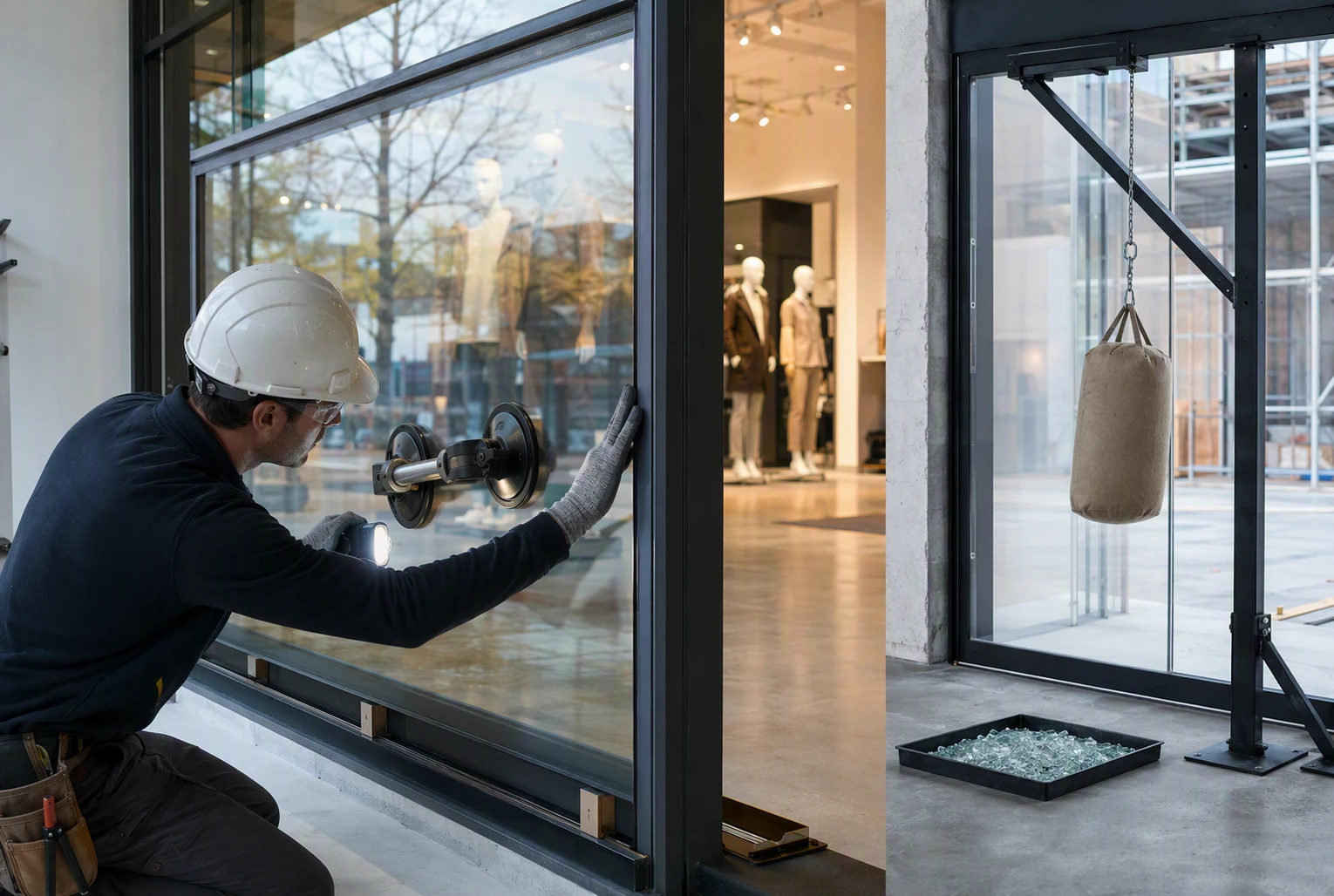
| Ask your supplier | Why it matters |
|---|---|
| Was this exact VIG unit tested? | Glass makeup affects impact results |
| What is the Class A or B rating? | It confirms the impact level |
| Is permanent marking included? | It supports jobsite records |
Do not assume VIG is safety glazing by default. Ask for the test report and product mark.
- Confirm the required safety location with your designer.
- Match the approved VIG build to the order.
- Keep test and marking records in the project file.
Also Read: Blog | Cox Glass, LLC | Your Oroville Glass & Window Experts
How the Updated Testing and Marking Rules Affect a Storefront Project
What the Mark Should Show
Ask to see the permanent safety-glazing mark before glass ships. Under ANSI Z97.1-2026, the mark should be legible and identify:
- The supplier or fabricator
- ANSI Z97.1-2026
- Size rating – Limited or Unlimited
- Impact class – A or B
- “Indoor Use Only,” if that applies
The 2026 update also adds a test path for vacuum insulating glass. USGlass Magazine explains the updated marking and VIG requirements.
| Project check | Why it matters |
|---|---|
| Match the mark to the submittal | Prevents a wrong glass type at install |
| Check each door lite and sidelite | These are common safety-glazing zones |
| Keep photos for closeout | Helps during inspection and future repairs |
Do not accept a removable label as proof. The mark must remain on the installed glass.
Also Read: Add Value to Your House by Adding Replacement Windows
The Compliance Detail Retail Owners Should Not Miss
Questions to Ask Before Ordering Glass
Do not order storefront glass from a quote alone. Ask the supplier to confirm the exact safety-glazing need for each opening. ANSI Z97.1-2026 now covers vacuum insulating glazing and updates key test references, while federal rules still cite the 2015 reaffirmed edition for some regulated uses under 16 CFR Part 1201.
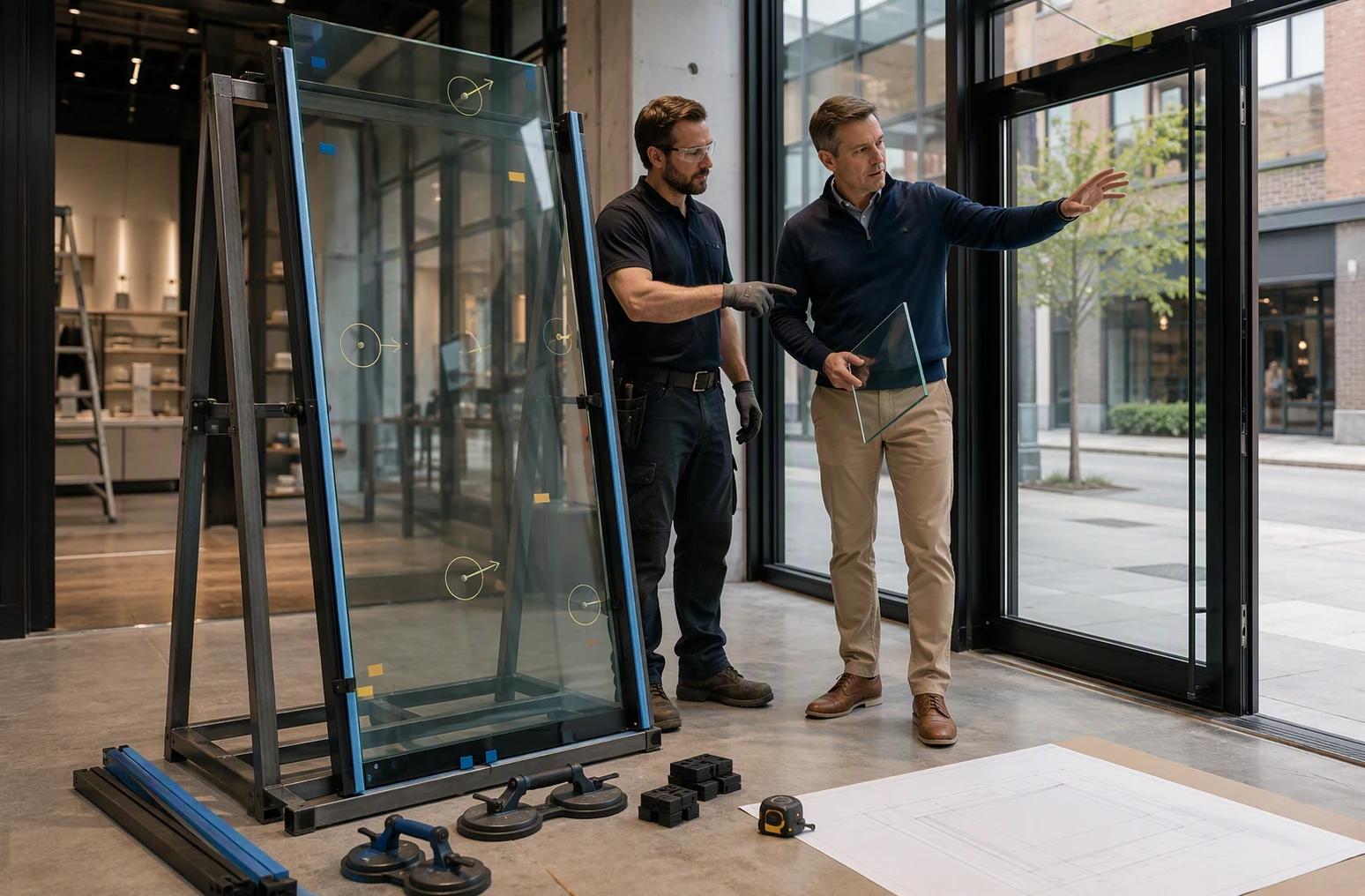
Ask these questions:
- Is this door, sidelight, or low-level panel a hazardous location?
- Which glass type meets the approved plans and local code?
- Will each safety pane carry a permanent ANSI marking?
- Does the quote state the glass size, thickness, and impact class?
- If using VIG, has the final unit passed the needed protocol?
| Verify | Why it matters |
|---|---|
| Permanent label | Shows safety-glazing compliance |
| Final glass makeup | Prevents substituting an untested build |
| Local review | Confirms code adoption and permit needs |
Keep product data and shop drawings in your project file before installation.
Also Read: ADAS Calibration Oroville: Static vs. Dynamic Guide
What Retail Teams Should Do Next
Start every new storefront or remodel with a glazing review. Ask your architect, contractor, and glass supplier to confirm where safety glazing is required and how each pane will be marked.
- List doors, sidelites, low windows, partitions, and display areas.
- Match each location to the local code and project plans.
- Request product data, test records, and permanent safety marks before installation.
- Keep those records with your closeout files.
ANSI Z97.1-2026 adds a testing path for vacuum insulating glass and clarifies related procedures, as the ASC Z97 committee confirms.
Do not assume a new standard changes local enforcement at once. Confirm requirements with the authority having jurisdiction.
Plan your retail glazing upgrade with Cox Glass, LLC. Get practical guidance on safer, code-ready glass for your Oroville or Chico property.
Frequently Asked Questions
Q1: Top rated glass service for businesses?
Choose a commercial glazier with retail project experience, clear scope notes, and proof of safety-glazing knowledge. Cox Glass, LLC serves Oroville and Chico businesses with custom commercial glass work.
Q2: Must every retail door use safety glass?
Typically, glass in doors and nearby hazardous locations needs safety glazing. Confirm the panel location, hardware, and local code requirements before ordering replacement glass.
Q3: What should I ask before replacing storefront glass?
Ask for the glass type, safety marking, thickness, edge treatment, lead time, and who handles permits. Get written confirmation that the proposed panel suits its exact location.
Conclusion
ANSI Z97.1-2026 adds clearer testing and VIG guidance. Confirm hazard locations, final-product markings, and local code rules. The updated standard supports safer retail glazing choices.

Recent Comments