
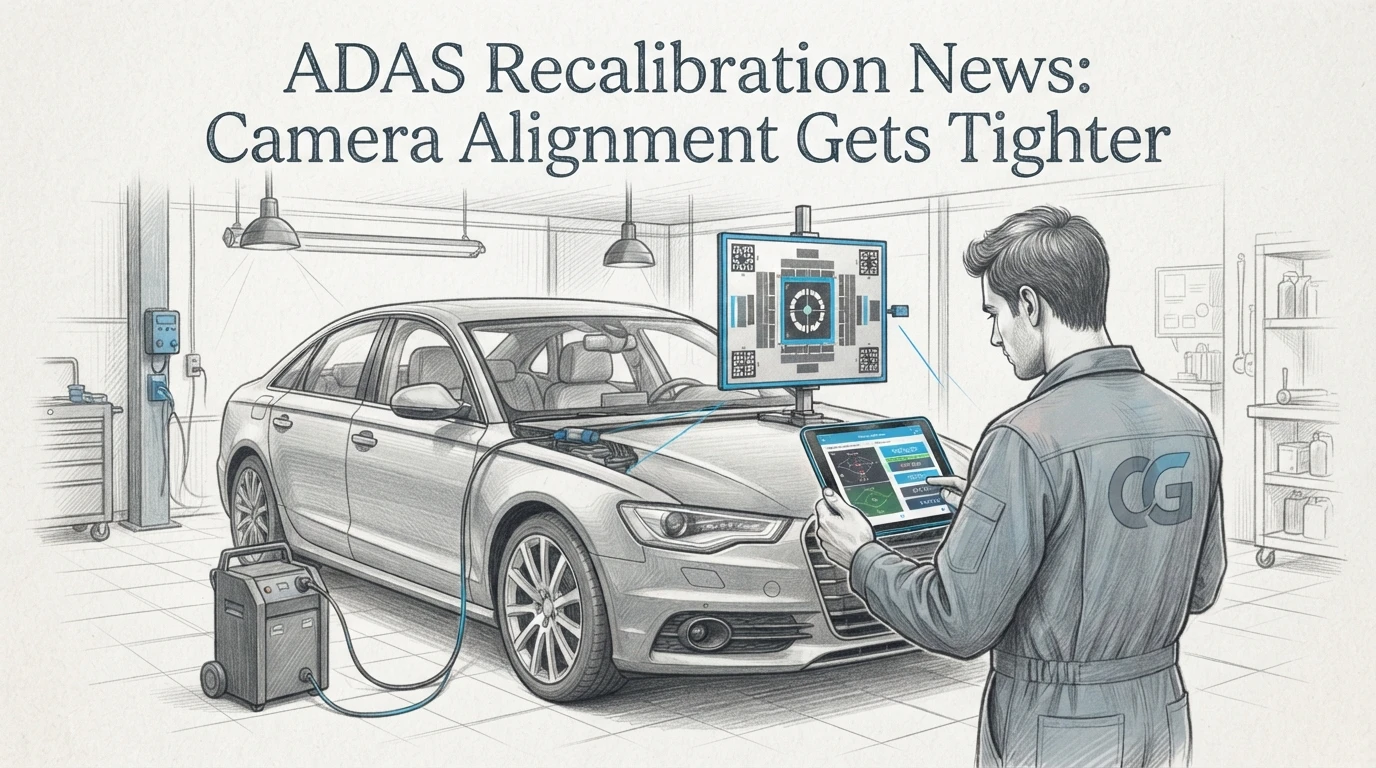
Quick Summary: A new bipartisan bill, H.R. 6688, would direct NHTSA to set firm federal tolerances for ADAS camera calibration, targeting the one-degree margin that can knock lane-keeping and emergency braking off-target after a windshield swap. Until rules land for 2028 and newer vehicles, drivers should confirm a shop runs both static and dynamic calibration and hands over a signed report showing the final camera angles passed. In Oroville and Chico, Cox Glass covers both methods on site and provides the written documentation that stricter standards are about to require.
A bipartisan bill, H.R. 6688, cleared a House subcommittee on Feb. 10, 2026. It directs NHTSA to set standardized tolerances for camera calibration, and the one-degree margin already used for windshield cameras now faces federal scrutiny. Even a small drift after windshield replacement can make lane-keeping and collision warnings misfire. This article explains the rule changes and how Oroville and Chico drivers can verify accurate camera calibration.
Why Federal Lawmakers Are Targeting Camera Alignment
Your car’s safety features are only as good as the aim of the camera behind them. Federal lawmakers agree, and two bills now moving through Congress would tighten how that aim is measured and repaired.
The One-Degree Problem Behind the Push
Most driver-assist cameras sit behind the windshield, so a windshield replacement, a lifted suspension, or even a curb strike can knock the camera’s aim off. Aim it off by just one degree, and at highway speed the camera looks dozens of feet away from where it should. That gap is why automatic emergency braking can miss a stopped car. Right now, there is no single federal standard for camera calibration, so shops follow whatever the manufacturer prints. H.R. 6688, the ADAS Functionality and Integrity Act, would direct NHTSA to set firm calibration guidelines, confirmatory test protocols, and performance metrics for model-year 2028 and newer vehicles.
How REPAIR Act Complements the Tolerance Bill
The ADAS bill sets the standard; the REPAIR Act pushes for access. Together they would let independent shops and owners perform and verify calibrations without being locked into dealership-only service. That pairing matters locally: after a windshield replacement, you can expect documented, verifiable calibration from your own trusted shop, not a guess.
Key takeaway: One degree of misalignment is small on paper but huge on the road. The law is catching up.
Who Calibrates Windshield Cameras Accurately
Not every glass shop that swaps a windshield can align the camera behind it. Accuracy depends on the right method, the right targets, and proof you can keep.
Static vs Dynamic: What Accurate Camera Alignment Looks Like
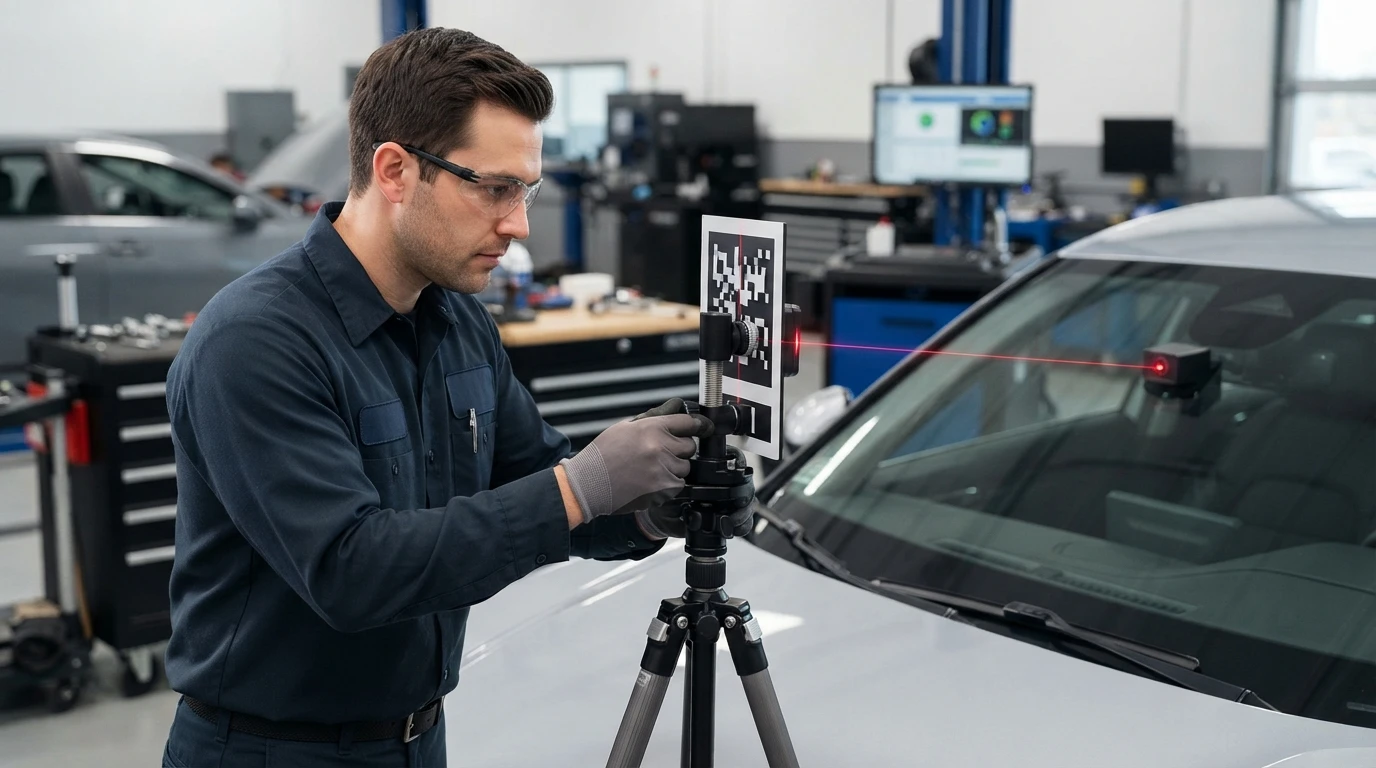
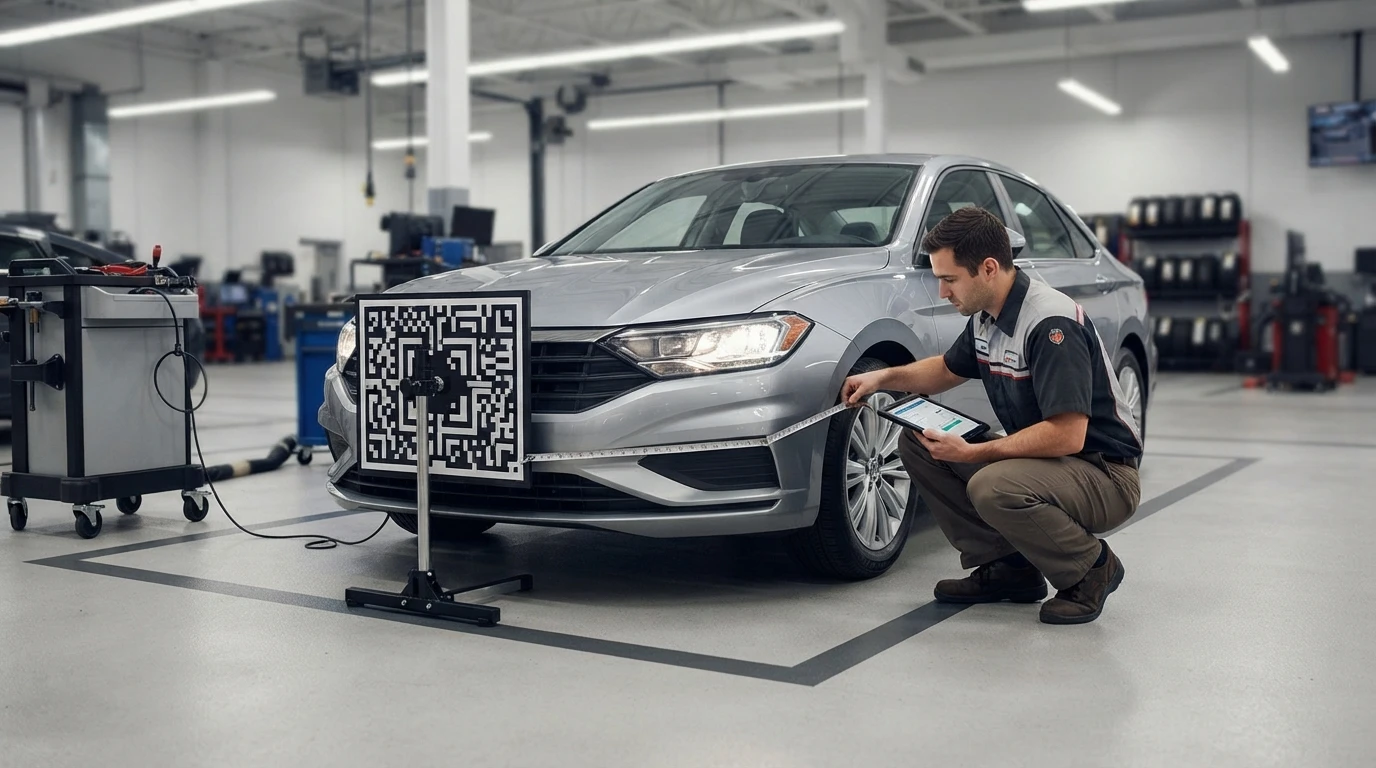
There are two methods, and some vehicles need both. Static calibration happens in the shop with the car parked. The technician uses target boards, a scan tool, and exact measurements to aim the camera. Dynamic calibration happens on the road, where the camera relearns lane markings at set speeds, as Snap-on’s technical guide explains.
Ask any shop which method your vehicle’s maker requires. A bay too small for target boards, or no scan tool at all, is a warning sign. In Oroville and Chico, a shop like Cox Glass that handles both methods on site removes that risk.
Documentation That Survives a Tighter Tolerance Standard
If H.R. 6688 leads to firmer federal rules, written proof will matter more. Get a printout showing the pre-scan, the calibration method used, and a passed post-scan. Keep it with your service records, because insurers and future buyers may ask for it.
What Drivers Should Ask Before a Windshield Swap
Ask three things before anyone touches your glass: Will the camera be recalibrated? Static, dynamic, or both? Will I get written proof? If a shop hesitates on any of these, keep looking. Good shops quote calibration as part of the job, not an add-on. Our windshield replacement tips cover more questions worth raising at the counter.
Reading Your Calibration Report
The report is your receipt for safety. It should list the vehicle’s make, model, and VIN, the calibration method used, the target board distance and lighting setup (for static work), and a pass result with the final camera angles. A report showing angles off by even one degree means the camera is out of tolerance and the work is not done.
Check the date and technician signature too. Missing fields are a red flag. Keep the report with your service records, because if H.R. 6688 leads to firmer federal rules, written proof will matter more.
Need a windshield replacement with proper ADAS recalibration? Trust Cox Glass, LLC’s 60-plus years of local experience. Schedule your service at Cox Glass, LLC today.
Frequently Asked Questions
Q1: Who calibrates windshield cameras accurately?
Shops with the right targets, a scan tool, and both static and dynamic capability on site. In Oroville and Chico, ask for written proof before booking.
Q2: How long does ADAS recalibration take?
Static calibration usually takes 30-60 minutes; dynamic requires a road drive at set speeds. Some vehicles need both.
Q3: Does insurance cover camera recalibration?
Most policies cover recalibration as part of a windshield replacement claim. Confirm before work starts and keep the report.
Conclusion
Federal reform is heading toward stricter camera-alignment rules, and one degree now matters. Before any windshield swap, confirm your shop performs the right calibration on site and hands you documented proof. Local drivers can rely on Cox Glass’s ADAS recalibration expertise to meet that standard.

Recent Comments