
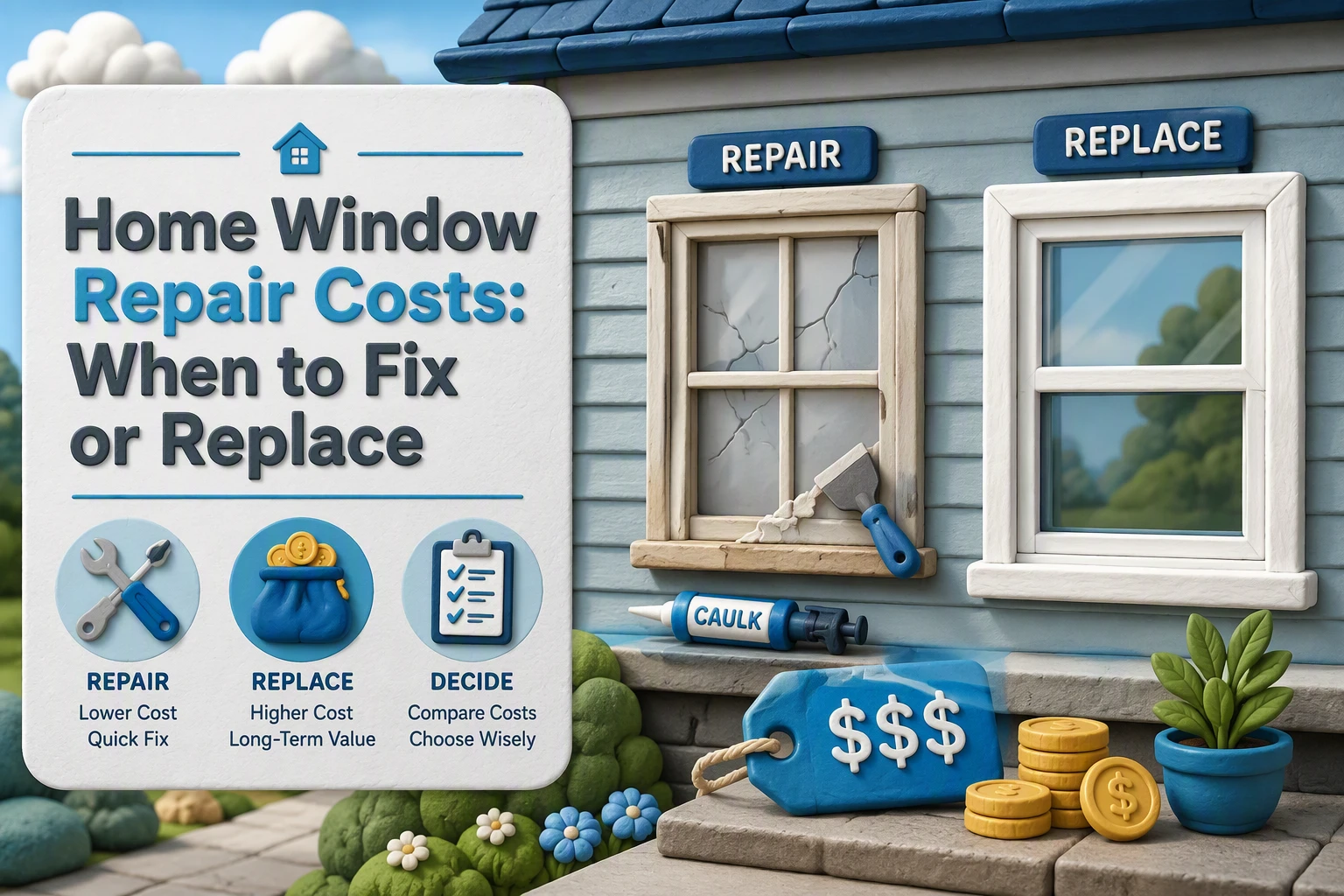
Quick Summary: Fix windows if the frame is solid and issues are minor, like drafts or hardware problems. Replace windows if there’s rot, failed seals, or widespread damage, which often costs more to repair. Getting accurate quotes and understanding the problem helps avoid overspending, and local experts like Cox Glass, LLC can assist in choosing the best option.
A window that fogs between panes on a sticky July morning can signal a simple house window fix or a much bigger bill. The real challenge is knowing when repair saves money and when replacement is the smarter move. This guide gives you a clear house window fix framework based on symptoms, cost, and lifespan. It draws on common repair pricing, failure patterns, and real-world maintenance logic so you can choose the right house window fix before overspending.
1. Identify the Real Problem Behind the Window Damage
Fog, drafts, and sticking each point to different fixes. Fog between panes usually means the insulated glass seal has failed, while inside-surface condensation often links to indoor humidity and cold glass, according to NRC guidance on window condensation. Drafts usually mean air leaks at the sash, frame, or rough opening, not always bad glass.
- Fog between panes – likely seal failure
- Cold drafts – likely air leakage
- Sticking sash – often paint buildup, swelling, or frame shift
Structural trouble shows up when the frame moves, the sill is soft, or cracks keep coming back. DOE-backed repair guidance says water entry and damaged surrounding materials can signal bigger wall or frame issues, not just a bad pane, in its window repair guideline.
If the sash racks, the frame is rotten, or the wall feels soft, repair the cause first.
Also Read: Window Replacement vs Repair: Which Saves More Money?
2. Compare Repair Costs With Replacement Costs
Repair usually wins when the frame is solid and the problem is limited. According to HomeAdvisor’s repair cost guide, most window repairs run $178 to $633, with simple fixes starting near $70.
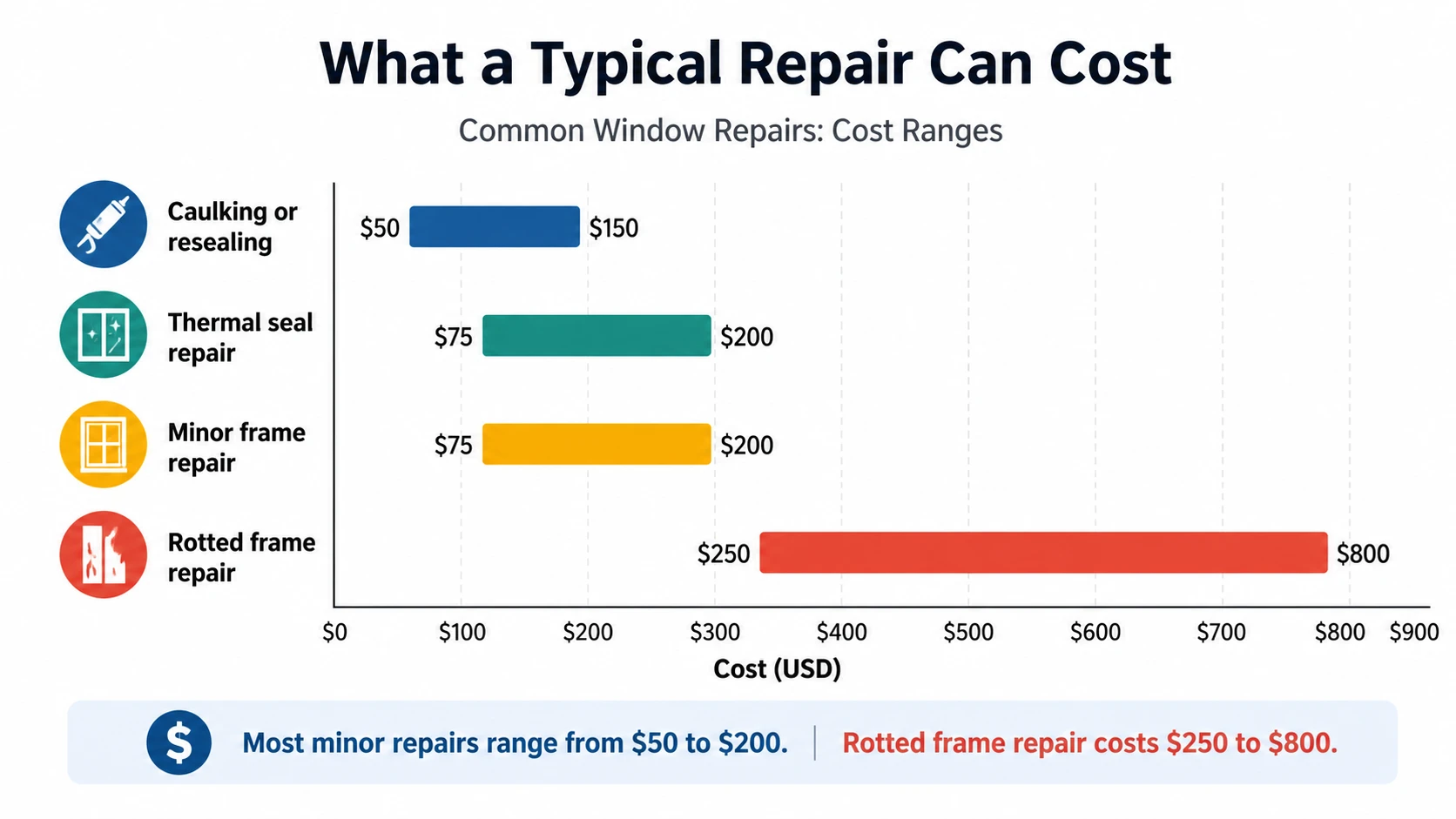
What a Typical Repair Can Cost
- Caulking or resealing: about $50 to $150
- Thermal seal repair: about $75 to $200
- Minor frame repair: about $75 to $200
- Rotted frame repair: about $250 to $800
If one part failed but the window still opens, locks, and stays square, repair is often the cheaper smart move.
What Replacement Usually Costs
Full replacement costs much more. HomeAdvisor’s replacement cost guide puts most new windows at $300 to $2,100 per window, with an average near $850.
| Option | Typical cost | Best fit |
|---|---|---|
| Repair | $70 to $800 | One clear issue, solid frame |
| Replace | $300 to $2,100 | Major damage, old failing unit |
Also Read: Blog | Cox Glass, LLC | Your Oroville Glass & Window Experts
3. Decide Whether Repair or Replacement Makes More Sense
Choose Repair When the Window Is Mostly Sound
Pick repair if the frame is solid, the glass is clear, and the problem is small. Drafts, worn weatherstripping, sticky sashes, or minor hardware issues often cost less to fix. The Department of Energy says updating windows in good condition can be the most cost-effective path.

- Good frame
- One problem area
- No spreading water damage
Repair first if a targeted fix restores function and stops energy loss.
Choose Replacement When the Problem Is Widespread
Choose replacement when damage affects the whole unit. ENERGY STAR notes failed seals, moisture between panes, degraded sills, drafts, and windows that will not open are strong signs. Replace if you see:
- Rot or soft frames
- Fog between panes
- Repeated leaks
- Multiple failing windows
Also Read: Window Replacement Trends: Energy Savings in 2026
4. Get Accurate Quotes and Avoid Costly Mistakes
What Every Quote Should Spell Out
A good window repair quote should be clear enough that you can compare it line by line. The FTC says written estimates should list the work, materials, completion date, and price, and contracts should include the contractor’s contact details and license number where required, according to FTC home improvement guidance.
Use this checklist:
- exact problem and window location
- repair vs. replacement scope
- glass type, parts, and labor
- permit needs, if any
- warranty terms in writing
If a company wants full payment up front, pushes cash only, or leaves blanks, treat that as a red flag.

Not sure if your window needs repair or full replacement? Get local advice from Cox Glass, LLC and book a quote that fits your budget.
Frequently Asked Questions
Q1: Should I repair or replace my window?
Repair if damage is small, hardware still works, and seals are intact. Replace if you have rot, broken seals, warped frames, or repeat leaks. If the fix costs over half of replacement, replacement usually makes more sense.
Q2: Does homeowners insurance cover window damage?
Sometimes. Insurance often covers sudden damage from storms, vandalism, or accidents. It usually does not cover old age, neglect, or failed seals. Check your deductible first, since a small claim may not save you money.
Q3: How long does a typical window repair take?
Many repairs take one visit if the issue is glass, caulk, locks, or weatherstripping. Custom glass, sash parts, or frame damage can take longer. A local shop like Cox Glass, LLC can tell you fast if parts must be ordered.
Conclusion
Fix first if the frame is sound and the problem is isolated. Replace when damage, leaks, or failed seals stack up. The U.S. Department of Energy says windows drive 25% to 30% of home heating and cooling energy use, so the cheapest real fix depends on condition, not guesswork.



Recent Comments