
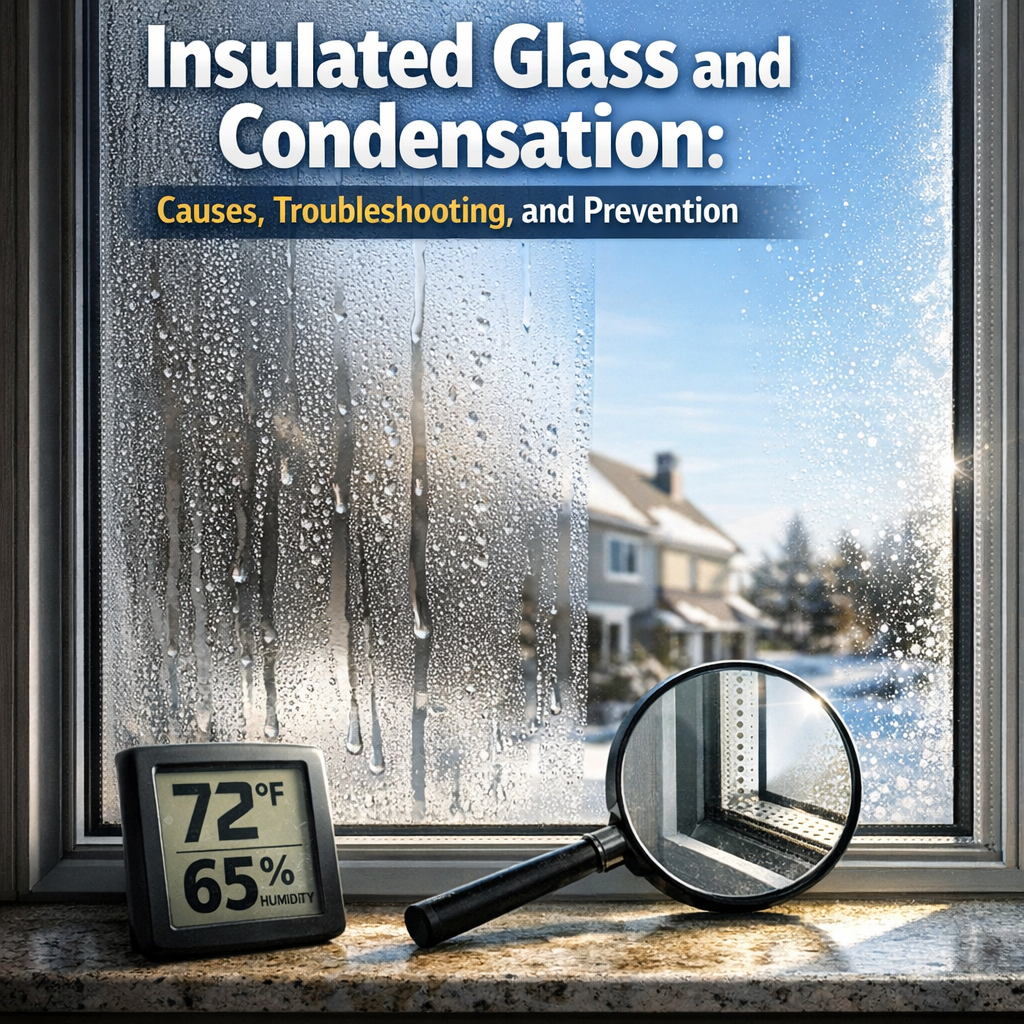
Insulated Glass Condensation: Causes and Resolution
Table of Contents
- Diagnosing the Source: Three Types of Window Condensation
- The Troubleshooting Finger Test
- Managing Indoor Humidity Levels to Stop Condensation
- Proactive Methods to Reduce Condensation
- Immediate Condensation Methods and Mold Growth Prevention
- Defining Condensation: The Science of Moisture Management
- Locating the Moisture: The Three Types of Condensation
- Troubleshooting Test: Identifying Seal Failure
- Strategies to Reduce Condensation and Stop Mold Growing
- When Condensation Indicates Seal Failure
- Troubleshooting Condensation: The Finger Test
- Condensation Solutions: Managing Indoor Humidity
- Condensation Solutions: Methods to Stop Condensation and Combat Underlying Humidity
- Managing Indoor Humidity to Combat Condensation
- Diagnosing and Resolving Seal Failure
- Frequently Asked Questions Regarding Condensation Solutions
- Next Steps: Diagnosing Seal Failure
Condensation is a fundamental physical process governed by the temperature differential effect. It occurs when water vapor, held suspended in warm, moist air, encounters a surface that is below the dew point temperature. This thermal interaction forces the vapor to transition instantly into liquid water droplets.
In residential structures, glass surfaces typically exhibit the lowest surface temperature in a room, making them the primary collection point for excess moisture. Understanding the location of this moisture is crucial for implementing effective condensation solutions and determining the root cause of the problem.
Diagnosing the Source: Three Types of Window Condensation
To effectively combat condensation and implement the correct condensation fix, homeowners must first identify where the moisture is accumulating. The location dictates whether the issue relates to proper insulation, high indoor humidity, or a seal failure.
Type 1: Exterior Condensation (Dew)
Exterior condensation appears as dew on the outside surface of the glass. This occurs when the exterior glass surface is colder than the outside air’s dew point.
This phenomenon is natural and temporary. Crucially, exterior condensation indicates that your insulated glass unit (IGU) is performing optimally, preventing indoor heat loss. This is a sign of proper window insulation.
Type 2: Interior Condensation (Indoor Humidity)
Interior condensation appears on the room-side surface of the glass. This is the most common type of window condensation and is caused by high indoor humidity levels, or excess moisture, generated by daily lifestyle activities.
If left unmanaged, persistent interior condensation can lead to serious secondary issues, including the development of mold and mildew on windowsills and frames. Addressing the underlying humidity is the primary solution here.
Type 3: Between Panes (Seal Failure)
Moisture buildup visible between the layers of glass indicates a seal failure. Insulated glass units rely on a hermetic seal to maintain the dry gas fill and keep moisture absorbers (desiccants) effective.
Once the seal fails, exterior humid air infiltrates the space, causing permanent fogging or streaking that cannot be cleaned. This condition requires complete glass unit replacement.
The Troubleshooting Finger Test
Use this simple test to determine if you are dealing with interior humidity or a seal failure, helping you choose the correct method to stop condensation.
- Attempt to wipe the visible moisture with an absorbent paper towel or a microfiber cleaning cloth.
- If the condensation wipes away easily, it is surface moisture (Interior Condensation). The solution involves managing humidity and ventilation.
- If the moisture remains visible inside the glass unit and cannot be reached, the seal has failed (Between Panes Condensation). Contact Cox Glass LLC for professional assessment.
Managing Indoor Humidity Levels to Stop Condensation
The most effective method to stop condensation caused by internal moisture is dedicated management of indoor humidity. Experts, such as Bob (Window Expert), emphasize that controlling underlying humidity is critical for prevention of mold spores and moisture damage.
Use of Dehumidifiers
Using a dehumidifier is highly effective for managing humidity. Modern dehumidifiers remove substantial amounts of water vapor from the air. Competitor analysis cited by Homes & Gardens indicates that effective units can remove up to 16 ounces of moisture in a 24-hour period, helping maintain optimal humidity levels.
Portable dehumidifier units are widely available at retailers such as Target, Walmart, and Amazon, offering practical condensation solutions for high-moisture areas.
Ventilation Techniques for Condensation Removal
Effective ventilation is a low-cost, high-impact solution for reducing humidity. Exhaust fans should be utilized during moisture-generating activities. Passive ventilation is also necessary.
Opening windows for 10 to 30 minutes daily, even when heating is running, allows humid indoor air to exchange with drier exterior air. This simple technique, often highlighted by experts like Ciera Cree, reduces the buildup of humidity and helps dissipate existing surface moisture, effectively eliminating condensation buildup.
Proactive Methods to Reduce Condensation
Implementing structural and temperature controls provides long-term solutions to combat condensation effectively.
The Role of Proper Window Insulation
Proper window insulation is fundamental to reducing condensation. Condensation forms when the glass temperature drops below the dew point. Installing double or triple-paned windows, as recommended by New Panes Creations, significantly raises the interior surface temperature of the glass.
By minimizing the temperature differential effect between the indoor air and the glass surface, high-quality insulated glass units prevent the water vapor from condensing. This proactive measure is essential for long-term condensation removal and prevention.
Indoor Heating Management Strategies
Maintaining a consistent internal temperature is a straightforward method to reduce moisture. When temperatures fluctuate drastically, the cold glass surfaces become prime targets for water vapor.
Maintaining the home temperature around 70°F (21°C) during colder months helps keep the glass surface temperature elevated. Using heating during peak condensation times, such as the early morning hours, can significantly diminish window moisture accumulation.
Immediate Condensation Methods and Mold Growth Prevention
For localized condensation problems, particularly on windowsills, moisture absorbers provide temporary relief.
Using Chemical Moisture Absorbers
These products, which often contain desiccant materials, actively pull water vapor from the immediate environment. Products like Vacplus or tabyik humidity absorber boxes, available at Target and Walmart, can reduce condensation on a windowsill within an hour.
A typical moisture absorber box can last five to six weeks, actively removing moisture and reducing visible water droplets until the underlying humidity is addressed.
Surface Moisture Elimination (Wiping)
While long-term solutions focus on humidity control, immediate steps must be taken to prevent mold growth if surface moisture is present. Regularly wiping the windows using a squeegee or microfiber cleaning cloth, such as those recommended by Mr. Siga, eliminates surface moisture.
This prevents water from pooling on the sill, which is where mold spores thrive. For cleaning windows and preventing mold, use of natural cleaning agents, specifically a diluted white vinegar solution, is an effective solution to stop mold growing and address residual moisture marks.
Assessing Secondary Moisture Remedies
Some remedies are commonly discussed but require careful assessment. Lighting candles, such as those from WoodWick, has been suggested to raise air temperature, but this is an inefficient method for serious condensation removal and introduces a fire hazard assessment risk. Focus instead on structural ventilation and dedicated moisture absorption tools.
Defining Condensation: The Science of Moisture Management
The formation of moisture on windows is governed by the Temperature Differential Effect. This fundamental physical process occurs when water vapor, held suspended in warm air, encounters a surface that is below the dew point temperature. This thermal shock forces the vapor to transition instantly into liquid water droplets.
Warm air retains significantly more water vapor, or underlying humidity, than cold air. When this moisture-laden air contacts a cold glass surface, it releases excess moisture. This is why a cold glass of tea ‘sweats’ in summer, and why you see condensation on windows during cold winter months.
The goal of effective condensation solutions is twofold: either to raise the temperature of the interior glass surface, thereby keeping it above the dew point, or to reduce the volume of water vapor available in the air through rigorous management of indoor humidity.
Understanding the precise location of this surface moisture is the critical first step in determining the appropriate condensation fix and implementing methods to combat condensation.
Locating the Moisture: The Three Types of Condensation
To implement effective condensation solutions and achieve condensation removal, the location of the moisture must first be accurately identified. The specific location indicates whether the issue stems from interior climate control, exterior environmental factors, or a structural failure within the insulated glass unit (IGU).
Exterior Condensation (Dew Formation)
Exterior condensation forms on the outer surface of the window pane facing the environment. This phenomenon is caused by a significant drop in the outdoor temperature combined with high humidity.
If the exterior glass surface falls below the outdoor dew point, dew naturally forms. As noted by experts like Bob (Window Expert), exterior condensation is not a fault, it is a clear indicator of superior insulation performance. The window is successfully preventing indoor heat transfer, keeping the outer pane cool.
No corrective action is required when condensation is observed in this location.
Interior Condensation (Excess Moisture)
Interior condensation forms on the room-facing surface of the glass. This is the most prevalent form of window condensation and is directly linked to excess moisture or high relative humidity levels inside the structure.
Everyday actions such as cooking, showering, and even breathing release water vapor, contributing significantly to the underlying humidity. When this warm, moist air meets the cold interior glass surface, water droplets deposit instantly.
Failure to address interior moisture can lead to the growth of mold and the spread of mold spores on window sills and frames. Immediate measures are necessary to stop condensation and combat condensation in this area.
Between Panes Condensation (Seal Failure)
When moisture accumulates between the two panes of glass, the issue is structural and severe. This indicates a failure of the hermetic seal around the perimeter of the IGU, allowing exterior air and moisture intrusion.
Once the seal fails, the desiccant material designed to absorb moisture within the unit becomes saturated, leading to persistent internal fogging. This type of condensation is a permanent structural failure and requires complete unit replacement. This is the only type of condensation that signifies a necessary condensation fix involving physical repair.
Troubleshooting Test: Identifying Seal Failure
Use a simple test to determine if the condensation is related to indoor humidity or a failed seal.
- Attempt to wipe the moisture away using a clean microfiber cleaning cloth or paper towel.
- If the moisture is on the interior surface and can be wiped off, the issue is high indoor humidity (Interior Condensation).
- If the moisture persists and cannot be reached or wiped away, the issue is structural failure (Between Panes Condensation).
Strategies to Reduce Condensation and Stop Mold Growing
Interior condensation issues require active management of indoor air quality to reduce condensation. Implementing ventilation and dehumidification protocols is the most effective way to manage humidity and prevent mold growth.
Controlling Underlying Humidity with Dehumidification
Dehumidifiers are essential tools for condensation removal. These devices actively pull water vapor from the air, maintaining optimal indoor humidity levels.
Competitor analysis shows that high-quality dehumidifiers can remove up to 16 ounces of moisture from the air in a 24-hour period, helping to stabilize the dew point. Brands like Vacplus, tabyik, and Mr. Siga offer effective models for residential use.
Utilizing Ventilation and Airflow
Improving airflow is a critical and immediate method to stop condensation. Warm, moist air must be exhausted outside the structure.
Utilize bathroom and kitchen exhaust fans during and immediately after activities like showering or cooking. Additionally, opening windows for short, regular periods promotes air exchange.
Opening windows for 10 to 30 minutes daily, even during cooler weather, significantly reduces existing condensation buildup and improves indoor air quality, eliminating the source of excess moisture.
Strategic Heating Management
Maintaining a consistent internal temperature helps keep the glass surface temperature above the dew point, preventing the Temperature Differential Effect.
Maintaining a home temperature around 70°F (21°C) consistently, particularly during early morning hours when condensation peaks, can significantly diminish window condensation. Proper window insulation, such as double or triple-paned windows, further aids this process by ensuring the interior pane remains warmer.
Passive Moisture Absorption Tools
For localized moisture problems, passive moisture absorbers provide a temporary fix. These products use desiccant materials, such as silica or calcium chloride, to capture airborne moisture.
Placing these humidity absorber boxes on sills can reduce visible water droplets within an hour. A typical moisture absorber can last approximately five to six weeks, providing a straightforward condensation fix on smaller windows.
Immediate Surface Moisture Elimination
If interior condensation has already formed, immediate action prevents water from settling and fostering mold growth prevention. Use a squeegee or microfiber cleaning cloth to remove the surface moisture.
Regularly wiping the windows prevents pooling on the sill, which is where mold spores typically begin to germinate. While this does not address the underlying humidity, it is a necessary step in managing the consequences of humidity.
When Condensation Indicates Seal Failure
If the troubleshooting test confirms moisture accumulation between the panes, the unit seal has failed. This is a structural issue that cannot be resolved through ventilation or dehumidification techniques.
If you suspect a seal failure in your insulated glass unit, contact Cox Glass LLC for a professional evaluation and replacement service.
Expert Insight
“While immediate condensation fixes often involve reducing interior humidity or wiping moisture, persistent condensation or moisture between panes signals a critical failure in the window’s thermal envelope or seal, demanding a structural solution.”, Building Science Expert
Troubleshooting Condensation: The Finger Test
To determine the source of moisture and implement the correct condensation fix, execute the following procedure. This step-by-step test distinguishes between high underlying humidity and structural seal failure, which requires Insulated Glass Unit (IGU) replacement.
This method focuses on surface moisture elimination to clarify the moisture location relative to the glass panes.
- Observe Location: Identify the physical placement of the window condensation during peak hours (morning or late evening).
- Attempt Removal: Use a clean finger or a microfiber cleaning cloth to attempt wiping the condensation away.
- Analyze Result: If the moisture is accessible and removable, the issue is related to interior or exterior climate control. If the moisture is trapped and cannot be touched, the seal has failed.
Condensation Troubleshooting Matrix
| Location of Moisture | Finger Test Result | Required Action |
|---|---|---|
| Interior Surface (Room-Facing) | Wiping the glass removes the moisture. | Implement strategies for management of indoor humidity. |
| Exterior Surface (Outside) | Wiping the glass removes the moisture. | No action required, indicates optimal insulation performance. |
| Between Panes (Internal Cavity) | Cannot touch or wipe the moisture. | Requires Insulated Glass Unit (IGU) replacement. Contact Cox Glass LLC. |
Condensation Solutions: Managing Indoor Humidity
If the finger test confirms the moisture is on the interior surface, the issue is high indoor humidity. Implementing these targeted condensation solutions will help stop condensation on windows and mitigate the risk of mold spores.
Optimizing Indoor Temperature Consistency
Condensation is exacerbated by the Temperature Differential Effect, where warm, moist air contacts a cold surface. To stop condensation on windows, maintain a consistent indoor temperature. Window expert Bob advises homeowners to keep interior temperatures around 70°F (21°C), especially during overnight hours and early morning when the exterior glass surface is coldest. Using heating systems effectively during these peak condensation times diminishes the temperature difference, thereby reducing the dew point and the formation of liquid water droplets.
Employing Home Ventilation Techniques
Effective ventilation is the primary method to stop condensation caused by daily activities like cooking and showering. To reduce condensation, open windows for 10 to 30 minutes daily, even during colder seasons. This action allows moisture-laden air to escape and introduces drier air. Experts recommend performing this ventilation while heating systems are active to maintain indoor temperature stability. Regularly opening windows helps eliminate condensation buildup and prevents the saturation of sills, minimizing the risk of mold spores forming.
For immediate surface moisture elimination, use specialized tools. After showering or cooking, wipe down the affected glass using paper towels or microfiber cleaning cloths. This simple physical removal prevents the excess moisture from returning to the air, helping to combat condensation.
Controlling Underlying Humidity with Dehumidifiers
When high indoor humidity persists, mechanical solutions are necessary for reducing condensation on windows. A portable dehumidifier is highly effective for managing humidity levels, especially in bedrooms or basements. Quality dehumidifiers, such as those manufactured by brands like Vacplus, tabyik, or Mr. Siga, can remove up to 16 ounces of excess moisture from the air within a 24-hour cycle. This targeted removal of underlying humidity is crucial for maintaining optimal indoor conditions and is a vital step in any long-term condensation fix.
Deploying Chemical Moisture Absorbers
For localized condensation problems, particularly on window sills, chemical moisture absorbers offer a simple condensation solution. These products, often purchased from retailers like Target, Walmart, or Amazon, utilize desiccant materials to pull moisture from the immediate air. A typical humidity absorber box can reduce visible water droplets within an hour and remain effective for five to six weeks, depending on the severity of the excess moisture. These tools are excellent for passively removing moisture in small, poorly ventilated areas.
Mold Growth Prevention and Structural Assessment
Persistent condensation leads to mold, which can rapidly spread mold spores and compromise indoor air quality. If removing moisture through ventilation and dehumidification fails, the root cause may be inadequate window insulation or structural air leaks. Installing modern double or triple-paned windows, as recommended by professionals like Ciera Cree writing for Homes & Gardens, keeps the interior glass surface warmer, significantly reducing the potential for condensation. For immediate remediation of existing mold growth, use a natural cleaning agent like vinegar, which acts as an effective mold killer.
If the finger test indicates moisture between the panes, the seal has failed. This structural failure cannot be resolved by managing humidity and requires replacement of the insulated glass unit. Contact Cox Glass LLC immediately for professional assessment and replacement services.
Condensation Solutions: Methods to Stop Condensation and Combat Underlying Humidity
Addressing interior condensation requires focused management of indoor humidity and effective air circulation. Implementing proven condensation methods is essential to stop condensation buildup and facilitate mold growth prevention.
If the finger test confirmed that the moisture is on the interior surface of the glass, the primary issue is excessive moisture content within the living space, or underlying humidity. The following instructional steps detail how to reduce condensation effectively.
Controlling Indoor Humidity Levels
High levels of water vapor must be actively removed or absorbed from the air to reduce condensation on windows.
- Deploy Dehumidification Equipment: Utilize a portable dehumidifier in areas with chronic moisture buildup, particularly during high-humidity seasons. These devices are highly effective at removing excess moisture from the air. A quality portable dehumidifier can remove up to 16 ounces of moisture from the air in a 24-hour period, helping to maintain optimal indoor humidity levels and combat condensation.
- Utilize Chemical Moisture Absorbers: Place chemical moisture absorbers, such as humidity absorber boxes available at retailers like Target or Walmart, near window sills or in enclosed spaces. These products contain desiccant materials that actively pull moisture from the air. A typical absorber can reduce visible water droplets on a windowsill within an hour, with effectiveness lasting approximately five to six weeks before replacement is required.
- Perform Surface Moisture Elimination: For immediate condensation removal, physically wipe the glass surface. Use absorbent materials such as paper towels or microfiber cleaning cloths to perform the task of wiping the windows. As noted by expert Ciera Cree in her tests, this is a viable, short-term surface moisture elimination method. Ensure cloths are cleaned or discarded immediately afterward to prevent spreading potential mold spores.
Enhancing Home Ventilation Techniques
Ventilation is critical for replacing saturated indoor air with drier exterior air, thereby lowering the dew point inside the home. This is the most fundamental approach to combat condensation.
- Use Exhaust Fans Appropriately: Run kitchen and bathroom exhaust fans during and immediately after activities that generate significant moisture, such as cooking or showering. Ensure these fans are properly vented outside and not into the attic space, which can exacerbate humidity issues.
- Implement Controlled Air Exchange: Practice home ventilation techniques by opening windows slightly for 10 to 30 minutes daily, even during colder months. This controlled air exchange helps dissipate existing condensation and significantly reduces internal humidity. Regular, short-duration ventilation is proven to eliminate condensation buildup and improve indoor air quality.
- Adjust Window Treatments: Ensure heavy drapes, blinds, or shutters are opened during the day. Closing them traps a pocket of warm, moist air next to the cold glass, accelerating condensation on windows. Opening them allows warmer room air to circulate across the glass surface, reducing the temperature differential effect.
Thermal Management and Structural Solutions
By keeping the interior surface of the glass warmer, the likelihood of condensation is dramatically reduced. This requires effective indoor heating management and assessment of structural integrity.
- Maintain Consistent Heating: Avoid drastic temperature fluctuations, especially during peak condensation times, such as early morning hours. Consistent heating is crucial for managing humidity. Recommendations suggest maintaining a consistent home temperature, ideally around 70 degrees Fahrenheit (21 degrees Celsius), to diminish window moisture.
- Assess Window Quality and Insulation: Proper window insulation is the long-term structural condensation fix. Installing double or triple-paned windows, particularly those utilizing high-quality spacer systems, helps keep the interior glass surfaces significantly warmer. As experts like New Panes Creations emphasize, better insulated windows shift the dew point further toward the outside, reducing the likelihood of moisture formation.
- Avoid Localized Moisture Sources: Refrain from placing humidifying devices, drying clothes, or excessive numbers of houseplants directly near windows. Note that lighting candles, such as those by WoodWick, is sometimes suggested as a remedy, but this often introduces more excess moisture into the air through combustion and requires a fire hazard assessment.
If these condensation methods fail to stop condensation that appears to be on the surface, or if you suspect the condensation is between the panes, contact Cox Glass LLC immediately for an assessment of potential seal failure.
Managing Indoor Humidity to Combat Condensation
If the finger test confirms the presence of surface moisture, the underlying cause is excessive humidity. Effective condensation solutions require systematic reduction of moisture content within the living space.
To stop condensation and prevent the development of mold, homeowners must utilize targeted condensation methods focused on ventilation and moisture absorption.
Utilizing Dehumidification Tools
The strategic use of a dehumidifier is a primary method to reduce condensation. These devices actively remove water vapor from the air, directly combating underlying humidity.
A high-quality portable dehumidifier can remove up to 16 ounces of excess moisture every 24 hours, thereby maintaining optimal indoor humidity levels and significantly reducing condensation on windows.
Implementing Home Ventilation Techniques
Ventilation is crucial for dissipating moisture generated by daily activities. Experts quoted in Homes & Gardens recommend routine air exchange.
To improve indoor air quality and eliminate condensation buildup, open windows for 10 to 30 minutes daily, even during cooler weather. This action, particularly when combined with heating, rapidly reduces humidity and assists in removing moisture.
Maintaining Consistent Indoor Heating
Condensation forms due to the Temperature Differential Effect. Maintaining a consistent interior temperature keeps the glass surface warmer, thereby raising it above the dew point.
To diminish window moisture, keep the home temperature consistent, ideally around 70°F (21°C). Using heating during peak condensation times, such as early morning hours, helps stop condensation from forming.
Chemical Moisture Absorption
For localized issues, such as severe condensation on a windowsill, chemical moisture absorbers provide immediate relief. These products, including silica-based or desiccant bags, draw moisture from the air.
Brands available at Target, Walmart, or Amazon, such as Vacplus and tabyik, can reduce visible water droplets within an hour. A typical chemical absorber can last five to six weeks, providing continuous humidity absorber box functionality.
Diagnosing and Resolving Seal Failure
If extensive management of indoor humidity fails to resolve the issue, or if the initial assessment revealed moisture trapped within the glass unit, the problem is structural.
Identifying Irreparable Failure
If the “finger test” confirms moisture is trapped between the glass panes, meaning you cannot reach the surface moisture by wiping the windows, the insulated glass unit (IGU) has experienced a failure of the hermetic seal.
This structural failure indicates that the desiccant material, designed to absorb trace amounts of moisture, is fully saturated. This condition manifests as persistent fogging or cloudiness between the panes.
The Need for Window Condensation Fix
This condition is irreparable through homeowner maintenance or humidity management. The only permanent condensation removal solution for moisture between the panes is the replacement of the entire insulated glass unit.
Attempting to apply a chemical condensation fix to the exterior surface of the glass will not resolve internal damage. Replacement ensures the use of modern seal technology designed for long-term durability and performance.
Contacting Cox Glass, LLC
If you suspect seal failure in your insulated glass units, contact Cox Glass, LLC immediately.
We provide precision replacement services for failing units, ensuring the integrity of your home’s insulation barrier.
Frequently Asked Questions Regarding Condensation Solutions
Mold Growth Prevention: Addressing Chronic Moisture
The presence of mold near fenestration systems is a direct secondary consequence of chronic, untreated interior window condensation. Mold growth prevention is impossible unless the source of excess moisture is eliminated.
Mold spores thrive in environments where water is allowed to pool on the windowsill or window frame for extended periods. This saturation, usually caused by high underlying humidity and inadequate ventilation, must be managed to successfully stop mold growing.
Utilizing Dehumidifiers for Humidity Control
Dehumidifiers are essential tools for removing moisture and form a core element of comprehensive condensation solutions. A standard portable dehumidifier unit can extract up to 16 ounces of water vapor every 24 hours, significantly lowering the relative humidity required for effective management of humidity.
This systematic reduction of water vapor ensures the interior glass surface remains above the dew point temperature, thereby helping to stop condensation and significantly reduce condensation overall.
Home Ventilation Techniques: Air Exchange
Implementing targeted home ventilation techniques is crucial to combat condensation. Yes, opening windows briefly is effective. Experts cited in publications like Homes & Gardens, including Ciera Cree, recommend exchanging air for 10 to 30 minutes daily.
This process rapidly replaces moisture-saturated indoor air with drier exterior air. Since cold air holds less moisture, this action significantly lowers the indoor dew point, assisting in the long-term management of indoor humidity and helping to reduce condensation buildup.
Indoor Heating Management and Temperature Differential
Maintaining a consistent indoor temperature is critical for condensation control. Condensation occurs due to the Temperature Differential Effect between the warm, moist indoor air and the cold glass surface.
To minimize surface temperature drops, experts recommend maintaining the internal environment around 70°F (21°C). Consistent indoor heating management, especially during early morning hours when surfaces are coldest, can diminish condensation on windows significantly.
Role of Window Insulation in Condensation Control
Proper window insulation is the most effective long-term strategy to stop condensation. Installing double or triple-paned insulated glass units (IGUs) increases the temperature of the interior glass surface.
As noted by window experts like Bob from New Panes Creations, maintaining a warmer interior surface temperature reduces the likelihood that the glass temperature will fall below the dew point, effectively mitigating the formation of window condensation.
Using Chemical Moisture Absorption Tools
For localized control, chemical moisture absorbers, such as silica-based desiccant bags or humidity absorber boxes, offer a temporary condensation fix. Products from brands like Vacplus or tabyik are readily available at retailers including Target, Walmart, and Amazon.
These tools initiate localized condensation removal. A typical moisture absorber unit can last five to six weeks and is reported to reduce visible water droplets on the windowsill within an hour of deployment. Place these tools directly on the sill to maximize impact on local humidity levels.
Surface Moisture Elimination (Wiping)
Wiping the windows to remove visible liquid water is a necessary short-term action, but it does not combat condensation at its source. Use clean, absorbent materials such as microfiber cleaning cloths or paper towels for this surface moisture elimination.
Some methods involve the use of natural cleaning agents (vinegar) mixed with water for cleaning windows. While this can temporarily reduce surface tension and minimize water adherence, it addresses only the surface moisture, not the underlying humidity. Always prioritize ventilation and dehumidification, following general guidelines like those provided by Mr. Siga, for long-term control.
Note: Avoid using excessive candles, such as those by WoodWick, as a primary moisture remedy, as this introduces combustion byproducts and potential fire hazards, which outweigh any minimal moisture absorption benefit.
Next Steps: Diagnosing Seal Failure
If you have implemented comprehensive humidity control measures (dehumidification, ventilation, temperature management) and still observe moisture between the glass panes, the issue is not high indoor humidity. This indicates a definitive seal failure within the Insulated Glass Unit (IGU).
A failed seal allows moist air penetration into the inert gas chamber, requiring IGU replacement. If you suspect internal seal failure, contact Cox Glass LLC for professional diagnosis and resolution.



Recent Comments