
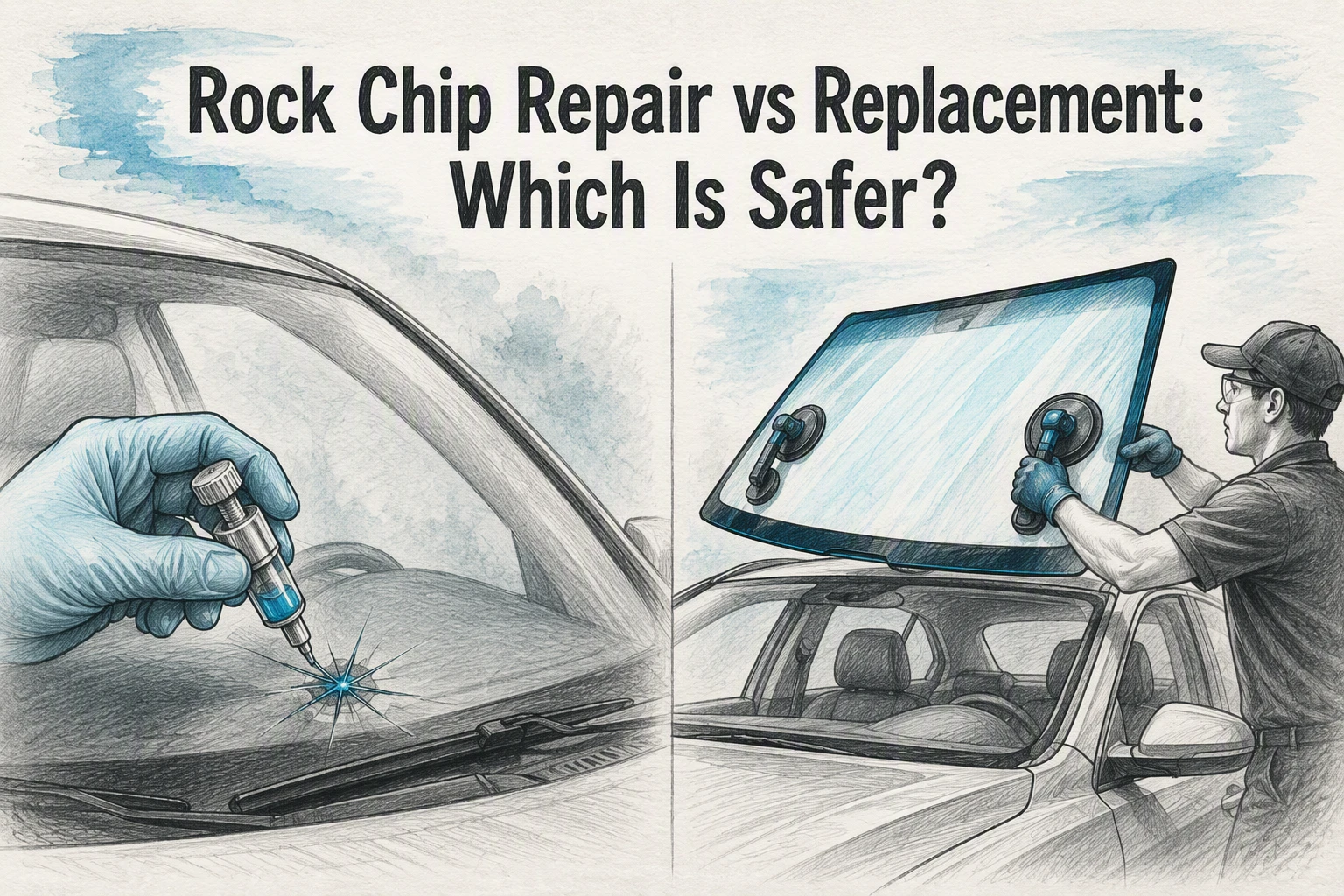
Quick Summary: Rock chip repair is safer than replacement only when the damage is small, stable, and away from your line of sight or ADAS cameras, since it preserves the factory seal. Replacement becomes the safer choice for edge cracks, vision-blocking damage, or anything near sensors, where repairs can distort safety systems. Location matters more than size, so a technician must inspect the chip before deciding. Cox Glass, LLC recommends prompt professional assessment to prevent heat and vibration from spreading the damage.
A pebble on a Butte County road can leave a star chip fast. Rock chip repair is often safer than automatic replacement when damage is shallow, small, and away from your view or sensors. Heat and vibration can spread it. A trained Cox Glass technician can assess depth, edges, and camera areas to decide if rock chip repair or replacement protects you best.
Rock Chip Repair vs Replacement: At a Glance
| Professional rock chip repair | Windshield replacement | |
|---|---|---|
| Safety role | Preserves suitable laminated glass and helps limit spreading | Restores clear, undamaged glazing when repair cannot provide a safe result |
| Best candidate | Small, localized chip or short crack away from critical areas | Large, deep, edge-reaching, sightline-blocking, or multiple damage |
| Main limitation | May leave a visible blemish and cannot correct unsuitable damage | Requires more time, cost, installation steps, and possible recalibration |
| Effect on visibility | Usually improves the damaged area, but may not erase it | Provides new clear glass when damage obstructs the driver |
| ADAS considerations | Must not interfere with forward-facing cameras or sensors | Camera-based systems may require recalibration after installation |
| Typical next step | Prompt professional inspection and resin repair | Vehicle assessment, correct glass selection, installation, and calibration review |
How Professional rock chip repair and Windshield replacement Compare
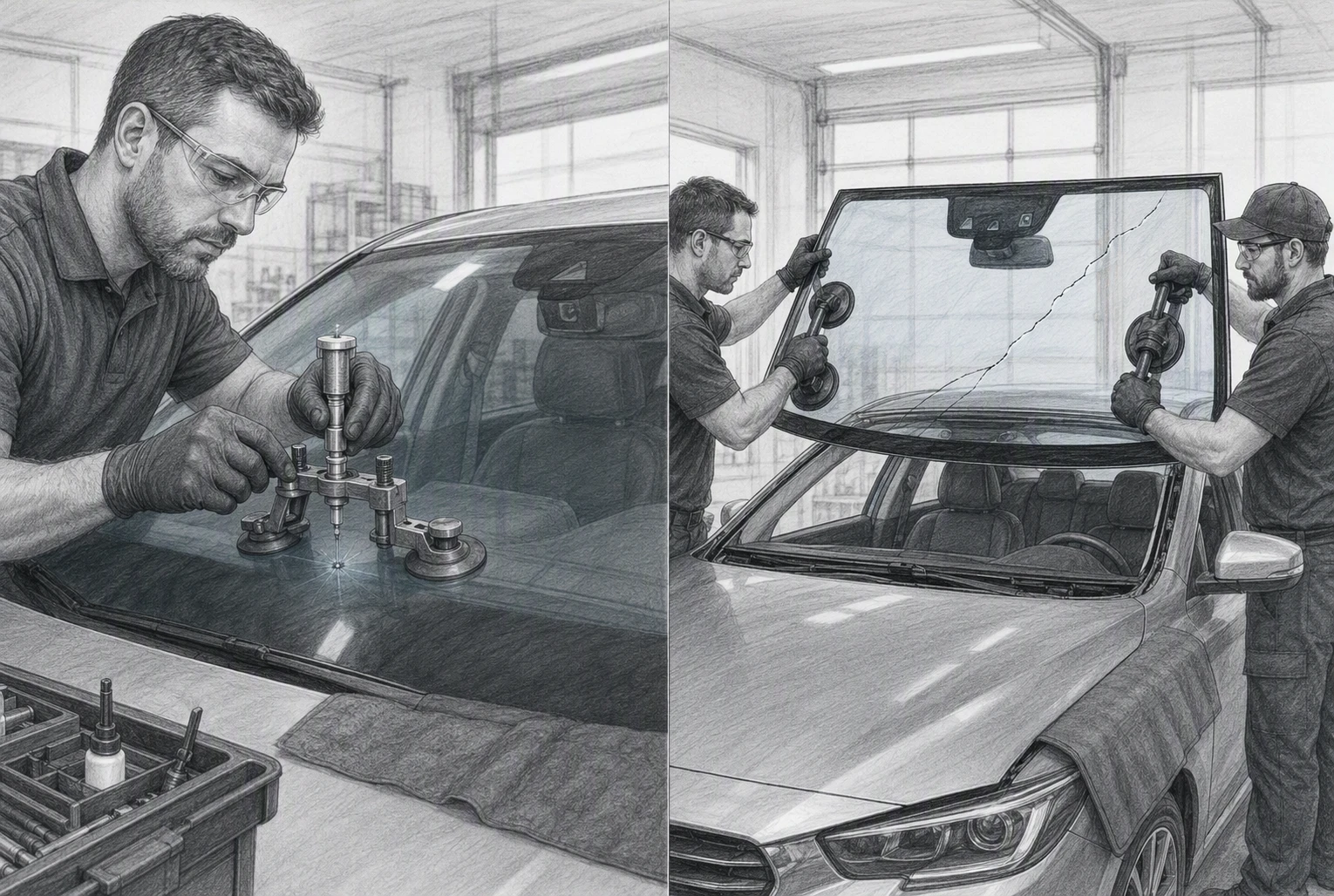
Professional rock chip repair
This resin service suits small, contained chips or short cracks away from key viewing and camera areas. It helps stop spread while keeping suitable laminated glass in place.
Windshield replacement
Replacement removes unsafe glass when damage is deep, reaches an edge, blocks vision, or appears in several spots. New glass may require ADAS calibration after installation, as industry guidance explains.
What Makes Rock Chip Repair Safe?
The Damage Has to Be Suitable for Resin
A safe repair starts with a close inspection, not a size rule. The technician checks the chip type, crack paths, depth, edge location, and whether it sits in your direct line of sight.
Resin repair works when it can fully flow into the break, push out air, and cure clear. Industry repair standards cover damage types, repair limits, technician steps, and final quality checks in the ROLAGS standard.
| Check | Safe repair sign | Replace instead if |
|---|---|---|
| Damage | Small, stable impact break | Crack spreads or reaches the edge |
| Glass layers | Outer layer only | Inner layer or interlayer is damaged |
| Driver view | Outside the main sight line | Repair may distort your view |
A repair should stop damage from spreading and keep your view clear. It will not make the chip vanish.
Cox Glass, LLC should inspect it before moisture and road vibration make a repair less likely.
Also Read: Windshield Chip Repair: 8 Signs You Need Fast Service
When Replacement Is the Safer Choice
Location Can Matter More Than Size
A tiny chip can call for replacement if it sits in a critical spot. Choose replacement when damage is:
- In your direct line of sight, where a resin repair may leave glare or blur
- At the windshield edge, where cracks can spread quickly
- Near a forward camera, sensor, or head-up display area
- On the passenger side where some vehicle designs rely on glass for airbag support
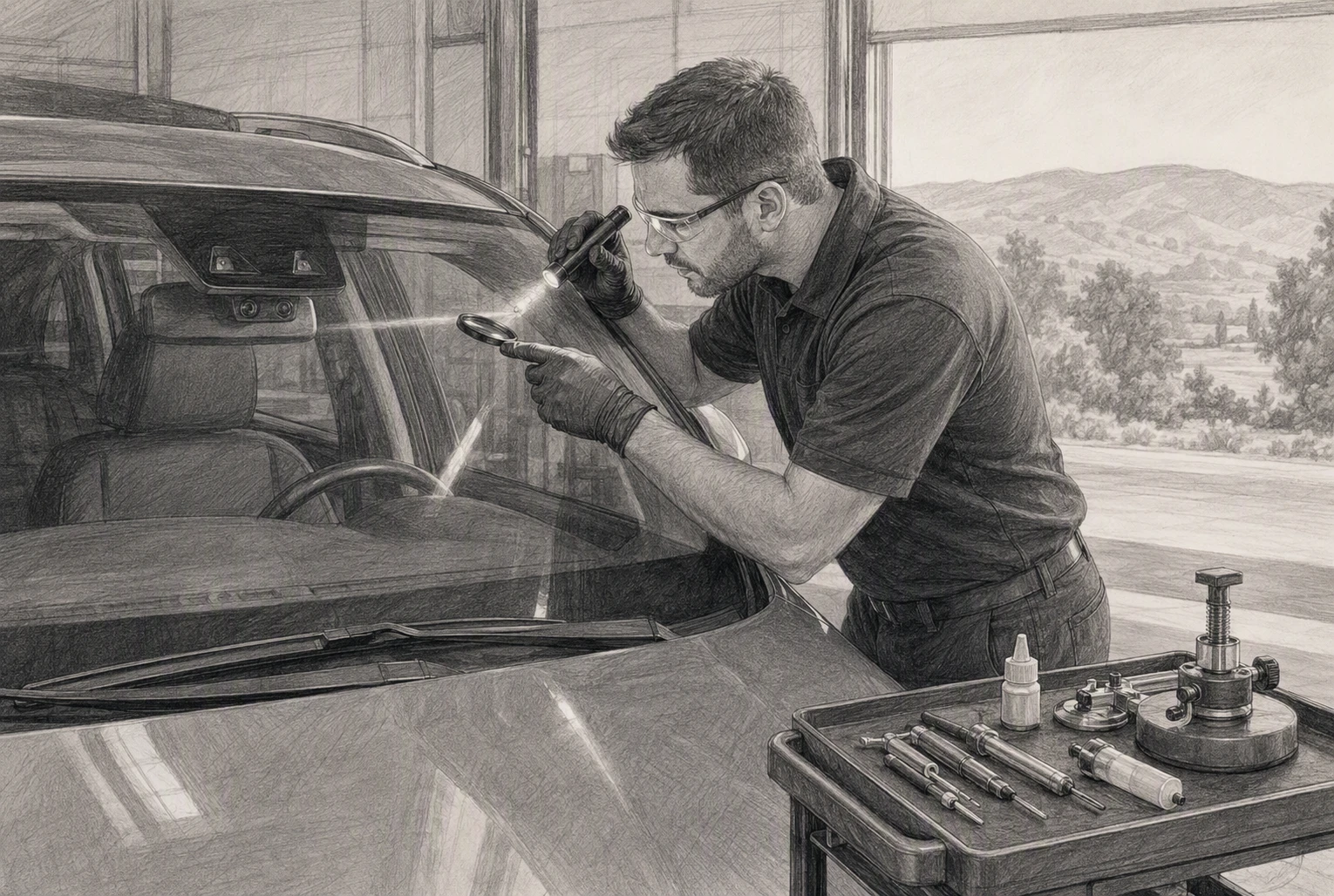
A vehicle maker may ban repairs in camera zones because distortion can affect safety systems. For example, Tesla’s repair guidance requires replacement for damage near its camera field or inner glass layer.
Do not judge by diameter alone. A technician should inspect the damage from the driver’s seat and check vehicle-specific limits.
New replacement windshields must meet federal glazing standards, according to NHTSA.
Also Read: Windshield Replacement vs Chip Repair: What Works Best?
Which Option Is Safer for Your Windshield?
Repair is safer when a small chip is stable, outside your main view, and away from cameras or sensors. It keeps the original factory seal in place.
Replacement is safer when damage spreads, reaches an edge, blocks your view, or sits near ADAS cameras. Subaru warns that repairs in camera zones can affect system function and may require replacement plus calibration, per its NHTSA-filed service bulletin.
| Damage condition | Safer choice |
|---|---|
| Small, clean chip away from sensors | Repair |
| Long crack, edge crack, or distorted glass | Replacement |
| Damage near forward camera | Technician inspection |
Do not judge safety by size alone. Location, crack growth, and vehicle sensors matter.
Protect your view and your safety. Schedule a windshield inspection with Cox Glass, LLC today.
Frequently Asked Questions
Q1: Can a rock chip be repaired safely?
Yes, if it is small, recent, and outside the driver’s main view. A technician checks cracks, depth, and edge damage first.
Q2: When does a chipped windshield need replacement?
Replacement is safer when cracks reach the edge, damage blocks your view, or the inner glass layer is harmed.
Q3: Will a repair make the chip disappear?
No. A proper repair restores strength and limits spreading, but a small mark may remain visible.
Conclusion
Repair is safer for small, stable chips outside your view and camera zones. Replace damaged glass that spreads or affects ADAS, then calibrate it. NHTSA bulletins warn camera-area damage can affect system function.

Recent Comments